
A Reflexive Music Therapy Clinical In-trospection in Working with Foster Care Youth
DOI:
https://doi.org/10.15845/voices.v18i4.2602Keywords:
foster care, music therapy, clinical introspectionAbstract
It is a challenge to write about the experiences of individuals in music therapy, while also honoring their experiences as co-participants of the process. There is also a challenge and struggle to research and write about child welfare populations as the therapist is many times the “voice” of the youth. As there is an imbalance in therapy at times, there is an imbalance in the youth’s experiences, not only in music therapy but in their everyday lives. This article is a clinical introspection to the research, theory, and practice in working with youth who have experienced foster care and/or adoption. Although not specifically a research study, elements to this introspection will include foundations of both heuristic inquiry and reflexive phenomenology.
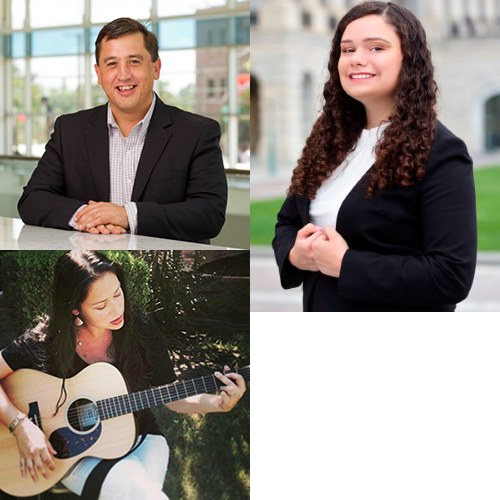
This special issue on child welfare promotes the idea of understanding the resources that youth need, providing a space for music therapists and youth to have a voice, and collaboration between those who have involvement in the child welfare system. It would then seem essential to promote the critical thought of music therapy students who have encountered the child welfare system as it relates to foster care and adoption. As part of this heuristic approach the four authors will provide their perspectives on their experience and the literature through the following questions: How are the youth perceived in the literature? How do the music experiences relate to their own experiences? What are the roles of the music therapist and the youth? Are the youth reflexively and appropriately discussed within the literature? What seems to be the nature of the music therapy relationship? How would music therapy have related to your life, or not? Through reflexivity, implications for the field of music therapy are drawn to further promote critical reflection and integrative collaboration.
References
Abrams, B. (2012). A relationship-based theory of music therapy: Understanding processes andgoals as being-together-musically. In K. E. Bruscia (Ed.), Readings on music therapy theory (pp. 128-176). Gilsum, NH: Barcelona Publishers.
Advocates for Children of New York, Inc. (2018). The importance of school stability for youthin foster care. Retrieved from: http://www.advocatesforchildren.org/sites/default/files/library/school_stability_youth_fostercare.pdf?pt=1
Bruscia, K. E. (2014). Defining music therapy (3rd ed.). University Park, Il: Barcelona Publishers.
Douglass, B. G., & Moustakas, C. (1985). Heuristic inquiry: The internal search to know. Journal of Humanistic Psychology, 25(3), 39-55, https://doi.org/10.1177/0022167885253004.
Fairchild, R., & Bibb, J. (2016). Representing people in music therapy research and practice: A balancing act. Voices: A World Forum for Music Therapy, 16(3), https://doi.org/10.15845/voices.v16i3.878.
Fairchild, R., McFerran, K. S., & Thompson, G. (2017). A critical interpretive synthesis of the ways children's needs and capacities are represented in the homelessness and family violence literature. Children Australia, 42(1), 18-29, https://dx.doi.org/10.1017/cha.2016.46.
Fairchild, R., & Mraz, M. (2017). Everything changed when I got those drums: A collaborative case reflection. Voices: A World Forum for Music Therapy, 18(1), https://doi.org/10.15845/voices.v18i1.957.
Gross, R. (2018). The social model of disability and music therapy: Practical suggestions for the emerging clinical practitioner. Voices: A World Forum for Music Therapy, 18(1), https://doi.org/10.15845/voices.v18i1.958.
Kruger, V., & Stige, B. (2014). Between rights and realities-music as a structuring resource in child welfare everyday life: A qualitative study. Nordic Journal of Music Therapy, 24, 99-122, https://dx.doi.org/10.1080/08098131.2014.890242.
McLeod, S. A. (2008). Wilhelm Wundt. Retrieved from http://www.simplypsychology.org/wundt.html http://www.simplypsychology.org/wundt.html
Moustakas, C. (2001). Heuristic research: Design and methodology. In K. J. Schneider, J. F. T. Bugental, & J. F. Pierson (Eds.), The handbook of humanistic psychology: Leading edges in theory, research, and practice (pp. 263-274). Thousand Oaks, CA: Sage Publications.
National Youth Foster Institute (2018). Education. Retrieved from: https://www.nfyi.org/issues/education/
O’Donohue, J. (2008). To bless the space between us: A book of invocations and blessings. New York: Doubleday.
Sprague, J., & Hayes, J. (2000). Self-determination and empowerment: A feminist standpoint analysis of talk about disability. American Journal of Community Psychology, 28(5), 671-695, https://dx.doi.org/10.1023/A:1005197704441.
Viega, M. (2016). Exploring the discourse in hip hop and implications for music therapy practice. Music Therapy Perspectives, 34(2), 138-146, http://dx.doi.org.ezp.twu.edu/10.1093/mtp/miv035.
Zanders, M. L. (2012). The musical and personal biographies of adolescents with foster care experience. Qualitative Inquiries in Music Therapy, 7, 71-109.
Zanders, M. L. (2013). Foster care youth. In L. Eyre (Ed.), Guidelines for music therapy practice in mental health (pp. 205-236). Gilsum, NH: Barcelona Publishers.
Zanders, M. L. (2014). Music therapy. In E. S. Neukrug (Ed.), Encyclopedia of Psychotherapy and Counseling (pp. 687-690). Thousand Oaks, CA: Sage Publications, Inc.
Zanders, M. L. (2015). Music therapy practices and processes with foster care youth: Formulating an approach to clinical work. Music Therapy Perspectives, 33(2), 97-107, http://dx.doi.org.ezp.twu.edu/10.1093/mtp/miv028.
Published
How to Cite
Issue
Section
License
Copyright (c) 2018 Michael L. Zanders, Melanie Midach, Lindy Waldemeier, Brittney Barros

This work is licensed under a Creative Commons Attribution 4.0 International License.
Articles published prior to 2019 are subject to the following license, see: https://voices.no/index.php/voices/copyright