
Música en un monólogo conmoción
DOI:
https://doi.org/10.15845/voices.v21i3.3305Palabras clave:
traumatismo craneoencefálico, conmoción cerebral, autoetnografía, escritura colaborativaResumen
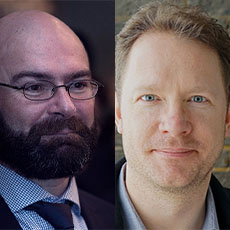
Los coautores, un musicoterapeuta y un musicólogo que sufrió una conmoción cerebral, desarrollan en colaboración una autoetnografía que detalla la experiencia fenomenológica de la conmoción cerebral y el papel cada vez mayor de la música a lo largo del proceso de recuperación. En el camino, descubren cosas nuevas sobre la música, la mente, la erudición y ellos mismos.
Citas
Gilbertson, S. (2008). The silent epidemic of road traffic injury: What can music therapists do about it? Voices: A World Forum for Music Therapy, 8(1). https://doi.org/10.15845/voices.v8i1.448
Gilbertson, S. (2016). Music therapy and traumatic brain injury. In J. Edwards (Ed.), Oxford handbook of music therapy (pp. 362–383). Oxford University Press.
Gilbertson, S., & Aldridge, D. (2008). Music therapy and traumatic brain injury: A light on a dark night. Jessica Kingsley Publishers.
Mullally, W. J. (2017). Concussion. American Journal of Medicine, 130(8), 885–892. https://doi.org/10.1016/j.amjmed.2017.04.016
Lee, K. V. (2010). An autoethnography: Music therapy after laser eye surgery. Qualitative Inquiry, 16(4), 244–8. https://doi.org/10.1177/1077800409351975
Gombrich, E. H. J. (2005). A little history of the world (C. Mustill, Trans.). Yale University Press. (Original work published 1935)
Sylvian, D., & Czukay, H. (1988). Plight and premonition [Album]. Venture Records.
Pärt, A. (1999). Für Alina [Album recorded by Alexander Malter]. ECM Records. (Original work published 1976)
Sanyal, S., Nag, S., Banerjee, A., Sengupta, R., & Ghosh, D. (2019). Music of brain and music on brain: A novel EEG sonification approach. Cognitive Neurodynamics, 13(1), 13–31. https://doi.org/10.1007/s11571-018-9502-4
Dali, S. (1931). The persistence of memory [Oil on canvas]. Alfred H. Barr, Jr. Galleries, MoMA, Floor 5, 517, Manhattan, New York, NY.
Budd, H. (2005). Avalon Sutra/As long as I can hold my breath [Album]. Darla Records.
Getz, S. (1960). Cool velvet: Stan Getz with strings [Album]. Verve Records.
Davis, M. (1969). In a silent way [Album]. Columbia Records.
Boje, D. M. (2001). Narrative methods for organizational and communication research. Sage Publications.
Hebert, D. G., & Rykowski, M. (Eds.) (2018). Music glocalization: Heritage and innovation in a digital age. Cambridge Scholars.
Gilbertson, S. (2019). Imagining something else: A queer essay. Voices: A World Forum for Music Therapy, 19(3). https://doi.org/10.15845/voices.v19i3.2702
Hebert, D. G. (2009). Musicianship, musical identity and meaning as embodied practice. In T. Regelski & J. T. Gates (Eds.), http://www.springer.com/education+%26+language/professional+%26+vocational+education/book/978-90-481-2699-6 (pp. 39–55). Springer Publishing.
Ellis, C. (2000) Creating criteria: An autoethnographic short story. Qualitative Inquiry, 6(2), 273–277. https://doi.org/10.1177/107780040000600210
Plummer, K. (2001). The call for life stories in ethnographic research. In P. Atkinson, A. Coffey, S. Delamount, J. Lofland, & L. Lofland (Eds.), Handbook of ethnography (pp. 395–406). Sage Publications.
Osborn, C. L. (1998). Over my head: A doctor’s own story of head injury from the inside looking out. Andrews McMeel Publishing.
Sinner, A., Hasebe-Ludt, E., & Leggo, C. (2018). Long story short: Encounters with creative nonfiction as methodological provocation. In P. Leavy (Ed.), Handbook of arts-based research (pp. 165–189). Guilford Press.
Lee, K. V., & Gouzouasis, P. (2017). Tommy’s tune: Autoethnographic duet. Qualitative Inquiry, 23(4), 316–320. https://doi.org/10.1177/1077800416659081
Horden, P. (Ed.) (2016). Music as medicine: The history of music therapy since antiquity. Routledge.
Sidik, R., Kamaruzaman, A. F., & Abdullah, M. J. (2021). Music therapy in medicine of Islamic civilisation [Online First], IntechOpen. https://doi.org/10.5772/intechopen.98707. Available from https://www.intechopen.com/online-first/77311
Vallat, P. (2011). al-Fārābī, Abū Naṣr. In H. Lagerlund (Ed.), Encyclopedia of Medieval Philosophy. Springer Publishing. https://doi.org/10.1007/978-1-4020-9729-4_165
Descargas
Publicado
Cómo citar
Número
Sección
Licencia
Derechos de autor 2021 Simon Gilbertson, David Gabriel Hebert

Esta obra está bajo una licencia internacional Creative Commons Atribución 4.0.
Articles published prior to 2019 are subject to the following license, see: https://voices.no/index.php/voices/copyright