
Adjusting the Pitch
An Ethnographic Exploration of Action Learning in an International Music Exchange Project
DOI:
https://doi.org/10.15845/voices.v21i2.3075Palabras clave:
community music, psycho-social support, music therapy, refugees, social change, action learning, resilience, international cooperationResumen
Ajustar el tono: una exploración etnográfica del aprendizaje activo en un proyecto de intercambio musical internacional
Resumen
El artículo traza el desarrollo de ocho años de “Música y resiliencia”, un proyecto de cooperación internacional entre una ONG palestina en el Líbano y una CBO italiana, con el objetivo de construir recursos musicales con y para las comunidades de refugiados del Líbano. Apoyado epistemológicamente por la etnografía, la sociología, la psicología y la pedagogía musical comunitaria, el artículo narra y analiza el desarrollo del proyecto como una respuesta multicapa, orgánicamente orientada al contexto geopolítico y social específico, en el que el seguimiento y la evaluación continuos informan los “ajustes” necesarios del “tono” del proyecto. Utilizando el paradigma del Aprendizaje Activo en el marco de la Teoría del Cambio Social, los autores aprovechan la experiencia y la investigación que ha estimulado “Música y Resiliencia” para identificar algunos “puntos cardinales” relevantes para la cooperación intercultural en general.
Citas
Agamben, G. (1998). Homo Sacer. Sovereign power and bare life. Stanford University Press.
Bartleet, B. L., & Higgins, L. (Eds.). (2018). The Oxford handbook of community music. Oxford University Press. https://doi.org/10.1093/oxfordhb/9780190219505.001.0001
Baumgartner, H. (1992). Remembrance of things past: Music, autobiographical memory, and emotion. NA-Advances in Consumer Research: Vol. 19.
Boeskov, K. (2017). The community music practice as cultural performance: Foundations for a community music theory of social transformation. International Journal of Community Music, 10(1), 85-99. https://doi.org/10.1386/ijcm.10.1.85_1
Cozolino, L. (2014). The neuroscience of human relationships: Attachment and the developing social brain. WW Norton & Company.
Erel, U. (2010). Migrating cultural capital: Bourdieu in migration studies. Sociology, 44(4), 642–660. https://doi.org/10.1177/0038038510369363
Haddad, S. (2004). The origins of popular opposition to Palestinian resettlement in Lebanon. IMR, 38(2), 470–492. https://doi.org/10.1111/j.1747-7379.2004.tb00206.x
Hanafi, S. (2008). Palestinian refugee camps. Disciplinary space and territory of exception. CARIM Analytic and Synthetic Notes 2008/44.
Higgins, L. (2012a). The community within community music. In McPherson, G. E., & Welch, G. F. (Eds.). The Oxford handbook of music education: Vol. 2 (pp. 104–19). Oxford University Press. https://doi.org/10.1093/oxfordhb/9780199928019.001.0001
Higgins, L. (2012b). Community music: In theory and in practice. Oxford University Press. https://doi.org/10.1093/acprof:oso/9780199777839.001.0001
Lebanese Palestinian Dialogue Committee, Central Administration of statistics, Palestinian Central Bureau of Statistics (2019). Detailed report of “The Population and Housing Census in Palestinian Camps and Gatherings in Lebanon”. http://lpdc.gov.lb/lpdc-publications/detailed-report-of-the-population-and-housing-cens/522/en
Lenette, C., & Sunderland, N. (2016). “Will there be music for us?” Mapping the health and well-being potential of participatory music practice with asylum seekers and refugees across contexts of conflict and refuge. Arts & Health, 8(1), 32–49. https://doi.org/10.1080/17533015.2014.961943
MacDonald, R. (2013). Music, health, and wellbeing: A review. International Journal of Qualitative Studies on Health and Well-being, 8. https://doi.org/10.3402/qhw.v8i0.20635
Maktabi, R. (1999). The Lebanese census of 1932 revisited. Who are the Lebanese? British Journal of Middle Eastern Studies, 26(2), 219–241. https://doi.org/10.1080/13530199908705684
Malloch, S. and Trevarthen, C. (Eds.). (2009). Communicative musicality: Exploring the basis of human companionship. Oxford University Press.
Nguyen-Gillham, V., Giacaman, R., Naser, G., & Boyce, W. (2008). Normalising the abnormal: Palestinian youth and the contradictions of resilience in protracted conflict. Health and Social Care in the Community, 16(3), 291–298. https://doi.org/10.1111/j.1365-2524.2008.00767.x
Parker, D., Younes, L., Orabi, M., Procter, S., & Paulini, M. (2021). Music therapy as a protection strategy against toxic stress for Palestinian refugee children in Lebanon: A pilot research study. Approaches: An Interdisciplinary Journal of Music Therapy First View (Advance Online Publication). http://approaches.gr/parker-a20210510/
Pavlicevic, M., & Ansdell, G. (2004). Community music therapy. Jessica Kingsley Publishers.
Pavlicevic, M., & Impey, A. (2013). Deep listening: Towards an imaginative reframing of health and well-being practices in international development. Arts & Health, 5(3), 238–252. https://doi.org/10.1080/17533015.2013.827227
Procter, S. (2011). Reparative musicing: Thinking on the usefulness of social capital theory within music therapy. Nordic Journal of Music Therapy, 20(3), 242–262. https://doi.org/10.1080/08098131.2010.489998
Putnam, R. D. (2000). Bowling alone: The collapse and revival of American community. Simon and Schuster. https://doi.org/10.1145/358916.361990
Reeler, D. (2007). A three-fold theory of social change and implications for practice, planning, monitoring and evaluation. Community Development Resource Association, South Africa. https://www.shareweb.ch/site/Poverty-Wellbeing/Documents/media_-_addressing_poverty_in_practice_-_impact_hypotheses_-_reeler_a_theory_of_social_change.pdf
Robertson, C. (2010). Music and conflict transformation in Bosnia: Constructing andreconstructing the normal. Music and Arts in Action, 2(2), 38–55. http://www.musicandartsinaction.net/index.php/maia/article/view/conflicttransformationbosnia
Rogers, C. (1990). The politics of the helping professions. In H. Kirschenbaum & V. L. Henderson (Eds.), The Carl Rogers Reader (pp. 376–395). Constable. (Reprinted from “The Politics of the Helping Professions,” in Carl Rogers on Personal Power, pp. 3–28, by C. R. Rogers, 1977, Delacorte Press.).
Ruud, E. (2008). Music in therapy: Increasing possibilities for action. Music and Arts in Action,1(1), 46–60. http://musicandartsinaction.net/index.php/maia/article/view/musicintherapy
Sayad, A. (1999). La double absence. Des illusions de l'émigré aux souffrances de l'immigré. Paris, Éditions du Seuil.
Schippers, H. (2018). Community music contexts, dynamics, and sustainability. In Bartleet, B-L., & Higgins, L. (Eds.). The Oxford Handbook of Community Music (pp. 23–42). Oxford University Press. https://doi.org/10.1093/oxfordhb/9780190219505.013.29
Siisiainen, M. (2003). Two concepts of social capital: Bourdieu vs. Putnam. International Journal of Contemporary Sociology, 40(2), 183–204.
Small, C. (1998). Musicking: The meanings of performing and listening. Wesleyan University Press.
Stige, B., Ansdell, G., Elefant, C., & Pavlicevic, M. (2010). Where music helps: Community music therapy in action and reflection. Ashgate.
Storsve, V., Westby, I. A., & Ruud, E. (2010). Hope and recognition. Voices: A World Forum for Music Therapy, 10(1). https://doi.org/10.15845/voices.v10i1.158
Ta’awon Lebanon. (2018). Towards constructing a better reality, Annual Report 2018, 32. http://www.taawon-lebanon.org/en/reports
Tagg, P. (2013). Music’s meanings: A modern musicology for non-musos. Mass Media Music Scholar’s Press.
Taylor, H. (2013). Refugees, the State and the concept of home. Refugee Survey Quarterly, 32(2), 130–152. https://doi.org/10.1093/rsq/hdt004
United Nations Relief and Works Agency. (n.d.). Where we work. Retrieved April 1, 2019, from https://www.unrwa.org/where-we-work/lebanon
Urbain, O. (Ed.). (2008, 2015). Music and Conflict Transformation: Harmonies and Dissonances in Geopolitics. I.B. Taurus.
Veblen, K. (2007). The many ways of community music. International Journal of Community Music, 1(1), 5–21. https://doi.org/10.1386/ijcm.1.1.5_1
Yamasaki, A., Booker, A., Kapur, V., Tilt, A., Niess, H., Lillemoe, K. D., Warshaw, A. L., & Conrad, C. (2012). The impact of music on metabolism. Nutrition, 28(11), 1075-1080. https://doi.org/10.1016/j.nut.2012.01.020
Descargas
Publicado
Cómo citar
Número
Sección
Licencia
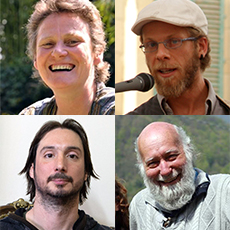
Derechos de autor 2021 Deborah Parker, Dario Gentili, Henry Brown, Alberto Balducci

Esta obra está bajo una licencia internacional Creative Commons Atribución 4.0.
Articles published prior to 2019 are subject to the following license, see: https://voices.no/index.php/voices/copyright