
Music in a Concussive Monologue
DOI:
https://doi.org/10.15845/voices.v21i3.3305Keywords:
head injury, concussion, autoethnography, collaborative writingAbstract
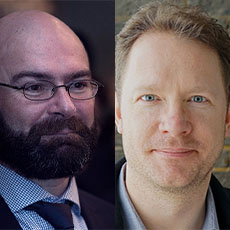
The co-authors, a music therapist and a musicologist who suffered a concussion, collaboratively develop an autoethnography detailing the phenomenological experience of concussion and the gradually increasing role of music throughout the recovery process. Along the way, they discover new things about music, the mind, scholarship, and themselves.
Japanese abstract:
脳震盪の語りの中の音楽
サイモン・ギルバートソン デイヴィッド・ガブリエル・ヘバート
要約
脳震盪を起こした音楽療法士と音楽学者の共同執筆者(共著者)は、脳震盪の現象学的経験と、回復の過程で音楽の役割が徐々に大きくなっていくことを詳述するセルフエスノグラフィー(オートエスノグラフィー)を共同で作成した。その過程で、彼らは、音楽、心、学問、そして自分自身について新たな発見をする。
キーワード:頭部損傷、脳震盪。セルフエスノグラフィー、共同執筆
References
Gilbertson, S. (2008). The silent epidemic of road traffic injury: What can music therapists do about it? Voices: A World Forum for Music Therapy, 8(1). https://doi.org/10.15845/voices.v8i1.448
Gilbertson, S. (2016). Music therapy and traumatic brain injury. In J. Edwards (Ed.), Oxford handbook of music therapy (pp. 362–383). Oxford University Press.
Gilbertson, S., & Aldridge, D. (2008). Music therapy and traumatic brain injury: A light on a dark night. Jessica Kingsley Publishers.
Mullally, W. J. (2017). Concussion. American Journal of Medicine, 130(8), 885–892. https://doi.org/10.1016/j.amjmed.2017.04.016
Lee, K. V. (2010). An autoethnography: Music therapy after laser eye surgery. Qualitative Inquiry, 16(4), 244–8. https://doi.org/10.1177/1077800409351975
Gombrich, E. H. J. (2005). A little history of the world (C. Mustill, Trans.). Yale University Press. (Original work published 1935)
Sylvian, D., & Czukay, H. (1988). Plight and premonition [Album]. Venture Records.
Pärt, A. (1999). Für Alina [Album recorded by Alexander Malter]. ECM Records. (Original work published 1976)
Sanyal, S., Nag, S., Banerjee, A., Sengupta, R., & Ghosh, D. (2019). Music of brain and music on brain: A novel EEG sonification approach. Cognitive Neurodynamics, 13(1), 13–31. https://doi.org/10.1007/s11571-018-9502-4
Dali, S. (1931). The persistence of memory [Oil on canvas]. Alfred H. Barr, Jr. Galleries, MoMA, Floor 5, 517, Manhattan, New York, NY.
Budd, H. (2005). Avalon Sutra/As long as I can hold my breath [Album]. Darla Records.
Getz, S. (1960). Cool velvet: Stan Getz with strings [Album]. Verve Records.
Davis, M. (1969). In a silent way [Album]. Columbia Records.
Boje, D. M. (2001). Narrative methods for organizational and communication research. Sage Publications.
Hebert, D. G., & Rykowski, M. (Eds.) (2018). Music glocalization: Heritage and innovation in a digital age. Cambridge Scholars.
Gilbertson, S. (2019). Imagining something else: A queer essay. Voices: A World Forum for Music Therapy, 19(3). https://doi.org/10.15845/voices.v19i3.2702
Hebert, D. G. (2009). Musicianship, musical identity and meaning as embodied practice. In T. Regelski & J. T. Gates (Eds.), http://www.springer.com/education+%26+language/professional+%26+vocational+education/book/978-90-481-2699-6 (pp. 39–55). Springer Publishing.
Ellis, C. (2000) Creating criteria: An autoethnographic short story. Qualitative Inquiry, 6(2), 273–277. https://doi.org/10.1177/107780040000600210
Plummer, K. (2001). The call for life stories in ethnographic research. In P. Atkinson, A. Coffey, S. Delamount, J. Lofland, & L. Lofland (Eds.), Handbook of ethnography (pp. 395–406). Sage Publications.
Osborn, C. L. (1998). Over my head: A doctor’s own story of head injury from the inside looking out. Andrews McMeel Publishing.
Sinner, A., Hasebe-Ludt, E., & Leggo, C. (2018). Long story short: Encounters with creative nonfiction as methodological provocation. In P. Leavy (Ed.), Handbook of arts-based research (pp. 165–189). Guilford Press.
Lee, K. V., & Gouzouasis, P. (2017). Tommy’s tune: Autoethnographic duet. Qualitative Inquiry, 23(4), 316–320. https://doi.org/10.1177/1077800416659081
Horden, P. (Ed.) (2016). Music as medicine: The history of music therapy since antiquity. Routledge.
Sidik, R., Kamaruzaman, A. F., & Abdullah, M. J. (2021). Music therapy in medicine of Islamic civilisation [Online First], IntechOpen. https://doi.org/10.5772/intechopen.98707. Available from https://www.intechopen.com/online-first/77311
Vallat, P. (2011). al-Fārābī, Abū Naṣr. In H. Lagerlund (Ed.), Encyclopedia of Medieval Philosophy. Springer Publishing. https://doi.org/10.1007/978-1-4020-9729-4_165
Published
How to Cite
Issue
Section
License
Copyright (c) 2021 Simon Gilbertson, David Gabriel Hebert

This work is licensed under a Creative Commons Attribution 4.0 International License.
Articles published prior to 2019 are subject to the following license, see: https://voices.no/index.php/voices/copyright