“Blending in”
Participant Observation in Adolescent Fieldwork Informed by Music Therapy Improvisation
DOI:
https://doi.org/10.15845/voices.v26i3.4812キーワード:
music therapy improvisation, participant observation, adolescents, trustbuilding, school revue要旨
This article explores how competencies associated with music therapy improvisation may inform participant observation as a relational research practice. Drawing on fieldwork conducted in two school revue settings in Norway, the study examines how a music therapist–researcher built trusting relationships with adolescents aged 16–19 through participant observation over a six-month period. The material consists of field notes and audio memos, together with individual and group interviews. Data were analysed using reflexive thematic analysis. The findings show that trust emerged through four interrelated relational themes: blending in, modesty, self-disclosure, and hesitations. Across these processes, the researcher continuously adjusted her presence and participation in response to subtle interpersonal cues, group dynamics, and ethical considerations. In the discussion, the themes are interpreted in light of music therapy improvisation, showing how competencies such as sensitivity to timing, responsiveness, and relational restraint shape trust-building in fieldwork. The article contributes to music therapy by illustrating how competencies developed through improvisation may
extend beyond clinical settings and inform relational research practices. At the same time, it contributes to qualitative research more broadly by demonstrating how such competencies may function as methodological resources in participant observation.
References
Aigen, K. (1993). The music therapist as qualitative researcher. Music Therapy, 12(1), 16–39. https://doi.org/10.1093/mt/12.1.16
Alvesson, M., & Sköldberg, K. (2018). Reflexive methodology: New vistas for qualitative research (3rd ed.). SAGE.
Bakken, A. (2024). Ungdata 2024. Nasjonale resultater [Ungdata 2024. National results]. (NOVA Report No. 6/24). NOVA, OsloMet – Storbyuniversitetet. https://hdl.handle.net/11250/3145138
Bakken, A. (2025). Ungdata 2025. Nasjonale resultater [Ungdata 2025. National results]. (NOVA Report No. 4/25) NOVA, OsloMet – Storbyuniversitetet. https://hdl.handle.net/11250/3211814
Bassett, R., Beagan, B., Ristovski-Slijepcevic, S., & Chapman, G. (2008). Tough teens: The methodological challenges of interviewing teenagers as research participants. Journal of Adolescent Research, 23(2), 119–131. https://doi.org/10.1177/0743558407310733
Bolger, L. (2013). Understanding and articulating the process and meaning of collaboration in participatory music projects with marginalized young people and their supporting communities [Doctoral thesis, University of Melbourne]. http://hdl.handle.net/11343/39742
Bøtker, J. Ø., Christensen, T. N., & Jacobsen, S. L. (2024). ‘That’s what makes me authentic, because what we do makes sense.’ Music professionals’ experiences of authenticity: A phenomenological, hermeneutical interview study. Approaches: An Interdisciplinary Journal of Music Therapy. https://doi.org/10.56883/aijmt.2024.31
Bøtker, J. Ø., & Jacobsen, S. L. (2023). The experience of authenticity across three music disciplines; Music Therapy, music teaching and music performance: Preliminary findings of a phenomenological interview study. Voices: A World Forum for Music Therapy, 23(1). https://doi.org/10.15845/voices.v23i1.3464
Braun, V., & Clarke, V. (2022). Thematic analysis: A practical guide. SAGE.
Bruscia, K. (2005). Developing theory. In B. L. Wheeler (Ed.), Music therapy research (2nd ed., pp. 540–551). Barcelona.
Bruscia, K. (2014). Defining music therapy (3rd ed.). Barcelona.
Csikszentmihalyi, M. (1990). Flow: The psychology of optimal experience. Harper Perennial.
Danielsberg, J., Bækkevold, A., Kallager, P. K. R., Evenby, M. F., Eikenes, R., Leonhardt, M., Løkra, S., Bjørnsgaard, A., Harkinn, I. O., Myhre, A. L., Stangstuen, E. K., & Aarseth, E. S. (2024). Å være ung i Innlandet [To be young in Innlandet]. Korus øst, Statsforvalteren i Innlandet, Innlandet fylkeskommune. https://korus.fra1.digitaloceanspaces.com/publications/Rapport_Ung-i-Innlandet_27.-
november-2024_02.pdf
Davidson, M. (2024, March 24). The Norwegian graduation celebration that bonds and divides students. OsloMet. ttps://www.oslomet.no/en/research/featuredresearch/norwegian-graduation-celebration-bonds-divides
Donoghue, J. O. (2017). The observed experiences of music therapy on parent–child interaction for families with children with down syndrome. Voices: A World Forum for Music Therapy, 17(2). https://doi.org/10.15845/voices.v17i2.892
Dos Santos, A. (2025). Reflexive research in music therapy. Six approaches in practice. Palgrave Macmillan. https://doi.org/10.1007/978-3-032-02033-8
Due, F. B., & Ghetti, C. M. (2018). Implementation of music therapy at a Norwegian children’s hospital: A focused ethnographic study. Voices: A World Forum for Music Therapy, 18(2). https://doi.org/10.15845/voices.v18i2.963
Dwyer, S. C., & Buckle, L. J. (2009). The space between: On being an insider-outsider in qualitative research. International Journal of Qualitative Methods, 8(1), 54–63. https://doi.org/10.1177/160940690900800105
Elliot, M. L. (2015). “What do you think we should do?”: Relationship and reflexivity in participant observation. OTJR: Occupational Therapy Journal of Research, 35(3), 133–141. https://doi.org/10.1177/1539449215583458
Emerson, R. M., Fretz, R. I., & Shaw, L. L. (2011). Writing ethnographic fieldnotes (2nd ed). The University of Chicago Press.
Esposito, G., Freda, M. F., & Picione, R. D. L. (2016). Reflexivity or “reflexivities” in higher education: Conceptualizing unique reflexive process. In M. F. Freda, J. González-Monteagudo, & G. Esposito (Eds.), Working with underachieving students in higher education (pp. 32–42). Routledge. https://doi.org/10.4324/9781315659121
Fangen, K. (2010). Deltagende observasjon [Participant observation](2nd ed.). Fagbokforlaget. https://fagbokforlaget.no/produkt/9788245010015-deltagendeobservasjon
Fuhr, G. (2022). “I don’t think of you as a therapist, you know”: Exploring relationships between adolescents and music therapists in the child welfare services [Doctoral thesis, Norwegian Academy of Music]. https://hdl.handle.net/11250/2886584
Hammersley, M, & Atkinson, P. (2019). Ethnography. Principles in practice (4th ed.). Routledge.
Hansen, T. I. (2024). Russ. In Store norske leksikon [ In Large Norwegian Encyclopedia]. https://snl.no/russ
Hjørnevik, K. (2022). An ethnography of music therapy in a Norwegian prison: Exploring musicking, identity, and change in the carceral setting [Doctoral thesis, Goldsmiths, University of London]. https://research.gold.ac.uk/id/eprint/31564/
Holck, U. (2010). Communicative musicality: A cornerstone for music therapy. Nordic Journal of Music Therapy, 19(1), 81–83. https://doi.org/10.1080/08098130903538214
Johnsen, C., & Ding, H. T. (2021). Therapist self-disclosure: Let’s tackle the elephant in the room. Clinical Child Psychology and Psychiatry, 26(2), 443–450. https://doi.org/10.1177/1359104521994178
Jorgensen, D. L. (2015). Participant observation. In R. Scott & S. Kosslyn (Eds.), Emerging trends in the social and behavioral sciences (pp. 1–15). John Wiley & Sons, Inc. https://doi.org/10.1002/9781118900772.etrds0247
Kimber, L. R., & Dairon, E. (2023). Ethnographic interviews. In L. R. Kimber, F. Badache, & L. Maertens (Eds.), International organizations and research methods (pp. 48–55). University of Michigan Press. https://www.jstor.org/stable/10.3998/mpub.11685289.16
Klyve, G. P. (2023). The importance of fun: Perceptions of music therapy for children at an inpatient unit in mental health care [Doctoral thesis, University of Bergen]. https://bora.uib.no/bora-xmlui/handle/11250/3060258
Klyve, G. P., & Rolvsjord, R. (2023). Moments of fun: Narratives of children’s experiences of music therapy in mental health care. Nordic Journal of Music Therapy, 32(2), 100–120. https://doi.org/10.1080/08098131.2022.2055114
Krøier, J. K., & Ridder, H. M. (2022). “When the music is on, she is there”—Professional caregivers’ perspectives and use of musical interactions in caring for the person with dementia. Approaches: An Interdisciplinary Journal of Music Therapy. https://doi.org/10.56883/aijmt.2024.68
Lareau, A. (2021). Listening to people: A practical guide to interviewing, participant observation, data analysis, and writing it all up. University of Chicago Press. https://doi.org/10.7208/chicago/9780226806600.001.0001
Lichtenstein, O. (2025). Beyond the mirror: Theory and practice of therapist selfdisclosure in clinical work. European Journal of Psychotherapy & Counselling, 27(3–4), 282–297. https://doi.org/10.1080/13642537.2025.2539090
Lincoln, Y. S., & Guba, E. G. (1985). Naturalistic inquiry. Sage.
Malloch, S., & Trevarthen, C. (2009). Musicality: Communicating the vitality and interests of life. In S. Malloch & C. Trevarthen (Eds.), Communicative musicality. Exploring the basis of human companionship (pp. 1–11). Oxford University Press.
https://doi.org/10.1093/oso/9780198566281.003.0001
McFerran, K. (2010). Adolescents, music and music therapy: Methods and techniques for clinicians, educators and students. Jessica Kingsley.
McFerran, K., Skinner, A., Hall, T., & Thompson, G. (2022). Structure, agency and community: Using online music gatherings to support social inclusion for people with disabilities in Australia during the COVID-19 pandemic. Nordic Journal of Music Therapy, 31(3), 259–272. https://doi.org/10.1080/08098131.2021.2008474
McIvor, D. S. H. (2023). Exploring the client-therapist relationship in music therapy: A qualitative study in adult mental healthcare. Voices: A World Forum for Music Therapy, 23(3). https://doi.org/10.15845/voices.v23i3.3931
Metell, M. (2015). “A great moment ... because of the music”: An exploratory study on music therapy and early interaction with children with visual impairment and their sighted caregivers. British Journal of Visual Impairment, 33(2), 111–125. https://doi.org/10.1177/0264619615575792
Noble, H., & Heale, R. (2019). Triangulation in research, with examples. Evidence-Based Nursing, 22(3), 67–68. https://doi.org/10.1136/ebnurs-2019-103145
Pink, S. (2015). Doing sensory ethnography (2nd ed.). SAGE.
Prior, M. T. (2018). Accomplishing “rapport” in qualitative research interviews: Empathic moments in interaction. Applied Linguistics Review, 9(4), 487–511. https://doi.org/10.1515/applirev-2017-0029
Procter, S. (2013). Music therapy: What is it for whom? An ethnography of music therapy in a community mental health resource centre [Doctoral thesis, University of Exeter]. https://hdl.handle.net/10871/11101
Ødegaard, C. H., Engebretsen, I. M. S., Veseth, M., Blindheim, A. A., & Stige, B. (2022). Health care workers’ perspectives on the challenges and possibilities of music therapy within medication-free treatment services. Nordic Journal of Music Therapy, 32(3), 241–
https://doi.org/10.1080/08098131.2022.2115530
Roaldsnes, M. H. (2017). Musikk i helsefremmande arbeid med einslege mindreårige flyktningar. Ein kvalitativ studie av ei musikkgruppe for ungdom med bakgrunn som einslege flyktningbarn [Music in health-promoting work with unaccompanied minor refugees: A qualitative study of a music group for youth with a background as unaccompanied refugee
children.] [Doctoral thesis, Norwegian Academy of Music]. https://hdl.handle.net/11250/2469525
Rolvsjord, R. (2010). Resource-oriented music therapy in mental health care. Barcelona.
Rotenberg, K. J. (1994). Loneliness and interpersonal trust. Journal of Social and Clinical Psychology, 13, 152–173. https://doi.org/10.1521/jscp.1994.13.2.152
Schmid, E., Garrels, V., & Skåland, B. (2024). The continuum of rapport: Ethical tensions in qualitative interviews with vulnerable participants. Qualitative Research, 24(5), 1253–1271. https://doi.org/10.1177/14687941231224600
Skånland, M. S., & Trondalen, G. (2024). The therapeutic relationship in music therapy in a Flexible Assertive Community Treatment team: A joint interview study of service users and their Music Therapist. British Journal of Music Therapy, 38(1).
https://doi.org/10.1177/13594575231211298
Smetana, J. G. (2010). The role of trust in adolescent–parent relationships: To trust you is to tell you. In K. J. Rotenberg (Ed.), Interpersonal trust during childhood and adolescence (pp. 223–246). Cambridge University Press. https://doi.org/10.1017/CBO9780511750946.011
Spradley, J. P. (1979). Asking descriptive questions. In J. P. Spradley (Ed.), The ethnographic interview (pp. 78–91). Holt, Rinehart & Winston.
Spradley, J. P. (1980). Participant observation. Holt, Rinehart and Winston.
Stensæth, K. (2007). Musical answerability: A theory on the relationship between music therapy improvisation and the phenomenon of action [Doctoral thesis, Norwegian Academy of Music]. https://hdl.handle.net/11250/172597
Stensæth, K. (2017). Responsiveness in music therapy improvisation: A perspective inspired by Mikhail Bakhtin. Barcelona.
Stige, B., & Ledger, A. (2016). Ethnographic research. In B. L. Wheeler & K. Murphy (Eds.), Music therapy research (3rd ed., pp. 408–420). Barcelona.
Stige, S. H., Oddli, H. W., Hjeltnes, A., Watson, J., & Stige, B. (2024). The researcher as instrument: How our capacity for empathy supports qualitative analysis of transcripts. Qualitative Research in Psychology, 22(2), 378–398. https://doi.org/10.1080/14780887.2024.2368046
Strehlow, G. (2021). Trust development is essential in music therapy. Nordic Journal of Music Therapy, 30(1), 97–99. https://doi.org/10.1080/08098131.2020.1812272
Thorpe, M. R. (2013). The process of conducting qualitative research as an adjunct to the development of therapeutic abilities in counselling psychology. New Zealand Journal of Psychology, 42(3), 35–43.
Tickle, S. (2017). Ethnographic research with young people: Methods and rapport. Qualitative Research Journal, 17, 66–76. https://doi.org/10.1108/QRJ-10-2016-0059
Tjora, A. (2026). Kvalitative forskningsmetoder i praksis [Qualitative research methods in practice] (5th ed.). Gyldendal Norsk Forlag AS.
Trondalen, G. (2008). Musikkterapi: Et relasjonelt perspektiv [Music therapy: A relational perspective]. In G. Trondalen, & E. Ruud (Eds.), Perspektiver på musikk og helse: 30 år med norsk musikkterapi [Perspectives on music and health: 30 years of Norwegian music therapy](pp. 29–48). Norwegian Academy of Music.
Trondalen, G. (2016). Relational music therapy: An intersubjective perspective. Barcelona.
Wigram, T. (2004). Improvisation: Methods and techniques for music therapy clinicians, educators, and students. Jessica Kingsley.
Downloads
出版済
How to Cite
巻号
セクション
License
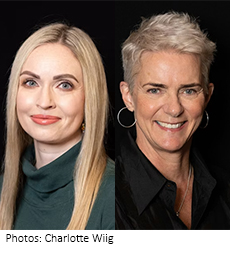
Copyright (c) 2026 Guro Høimyr, Karette Stensæth

This work is licensed under a Creative Commons Attribution 4.0 International License.
Articles published prior to 2019 are subject to the following license, see: https://voices.no/index.php/voices/copyright