
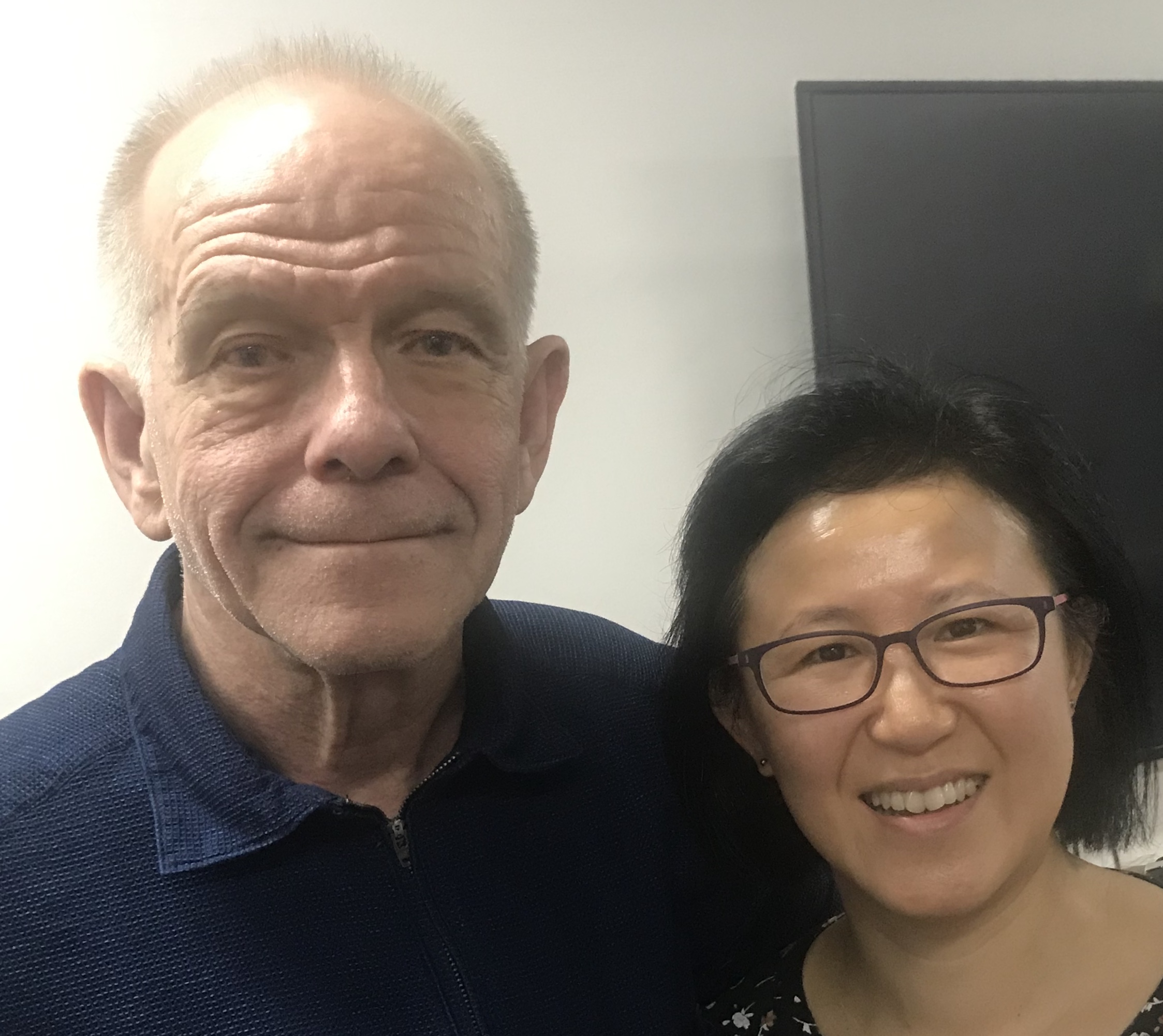
An Interview with Dr. Dag Körlin
Discussing Music Breathing
DOI:
https://doi.org/10.15845/voices.v21i2.3044Keywords:
Music breathing, Dr. Dag Körlin, interviewAbstract
For many years, Dr. Körlin, a well-known practitioner and primary trainer of Guided Imagery and Music (GIM) has been developing the practice of Music Breathing (MB) as an adaptation of GIM. A semi-structured interview was conducted in English to deepen the learning experience from the MB training with him. The first part of Dr. Körlin’s comprehensive training program for MB was started in 2019, and since then more and more GIM therapists have been encouraged to practice MB clinically. A brief description of stages in MB, rationales behind this development and other innovators in adapting GIM techniques specific for psychiatric population are reviewed. Following the content of the interview transcript, the author will identify key merits of this technique and provide a web link to a short video clip for the purpose of promoting MB to clinicians and the general public. In conclusion, MB is a useful asset for music therapists.
References
Abbott, E. (2019). The individual form of the Bonny Method of Guided Imagery and Music (GIM). In D. Grocke (Ed.), Guided Imagery and Music: The Bonny Method and beyond (2nd ed., pp. 27–40). Barcelona.
Ahonen, H. (2019). Putting the lights on in the room: Guided Imagery and Music (GIM) with trauma survivors. In D. Grocke (Ed.), Guided Imagery and Music: The Bonny Method and beyond (2nd ed., pp. 149–186). Barcelona.
Association for Music and Imagery (AMI). (n.d.). What is the Bonny Method? AMI. https://ami-bonnymethod.org/about/faq
Beck, B. D. (2019). Guided Imagery and Music in mental illness and mental health conditions. In D. Grocke (Ed.), Guided Imagery and Music: The Bonny Method and beyond (2nd ed., pp. 131–147). Barcelona.
Dimicelli- Mitran, L. (2020). Focused Music Imagery (FMI): Pathway through the psyche. Journal of the Association for Music and Imagery, 17, 37-54.
Goldberg, F. (1994). The Bonny Method of Guided Imagery and Music as individual and group treatment in a short-term acute psychiatric hospital. Journal of the Association for Music and Imagery, 3, 18–34.
Grocke, D. (2019). Introduction. In D. Grocke (Ed.), Guided Imagery and Music: The Bonny Method and beyond (2nd ed., pp. 3–7). Barcelona.
Hall, A. (2015). Earth Spirit. Guided Imagery and Music Program. In D. Grocke & T. Moe (Eds.), Guided Imagery and Music (GIM) and Music Imagery Methods for Individual and Group Therapy. Jessica Kingsley Publishers.
Kessler, R. C., Aguilar-Gaxiola, S., Alonso, J., Benjet, C., Bromet, E. J., Cardoso, G., Degenhardt, L., de Girolamo, G., Dinolova, R. V., Ferry, F., Florescu, S., Gureje, O., Haro, J. M., Huang, Y., Karam, E. G., Kawakami, N., Lee, S., Lepine J. P., Levinson, D., … Koenen, K. C. (2017). Trauma and PTSD in the WHO World Mental Health Surveys. European Journal of Psychotraumatology, 8(sup5). https://doi.org/10.1080/20008198.2017.1353383
Körlin, D. (2004). The Spektrum GIM Group Therapy. In I. Frohne-Hagemann (Ed.), Receptive Music Therapy. Wiesbaden, Reichert Verlag.
Körlin, D. (2019a). A neuropsychological theory of traumatic imagery in GIM. In D. Grocke (Ed.), Guided Imagery and Music: The Bonny Method and beyond (2nd ed., pp. 497–530). Barcelona.
Körlin, D. (2019b). Music Breathing. In D. Grocke (Ed.), Guided Imagery and Music: The Bonny Method and beyond (2nd ed., pp. 531–560). Barcelona.
Körlin, D. (2020). Silent and Music Breathing: Procedures and Inductions [Unpublished training manual] (revised ed., 15 April 2020).
Leslie, I. (2015). Awakenings: A contemporary journey. In D. Grocke D & T. Moe (Eds.), Guided Imagery and Music (GIM) and Music Imagery Methods for Individual and Group Therapy. Jessica Kingsley Publishers.
Maack, C. (2012). Outcomes and processes of the Bonny Method of Guided Imagery and Music (GIM) and its adaptations and psychodynamic imaginative trauma therapy for women with complex PTSD [Doctoral dissertation, Aalborg University]. https://vbn.aau.dk/ws/portalfiles/portal/68395912/Carola_Maack_12.pdf
Summer, L. (2002). Group music and imagery therapy: An emergent music therapy. In K. Bruscia & D. Grocke (Eds.), Guided Imagery and Music: The Bonny Method and beyond (pp. 297–306). Barcelona.
Summer, L. (2009). Client perspectives on the Music in Guided Imagery and Music [Doctoral dissertation, Aalborg University]. https://vbn.aau.dk/files/316409760/6467_lisa_summer_thesis.pdf
Summer, L. (2015). The journey of GIM training from self-exploration to a continuum of clinical practice. In D. Grocke & T. Moe (Eds.), Guided Imagery & Music (GIM) and Music Imagery methods for individual and group therapy (pp. 339–348). Jessica Kingsley.
Taylor, K. (2003). Exploring Holotropic Breathwork: Selected articles from a decade of The Inner Door. Hanford Mead.
Published
How to Cite
Issue
Section
License
Copyright (c) 2021 Wei Wah Angela Shum

This work is licensed under a Creative Commons Attribution 4.0 International License.
Articles published prior to 2019 are subject to the following license, see: https://voices.no/index.php/voices/copyright