
Story of the Rocking Rainbows 2019 – 2025
DOI:
https://doi.org/10.15845/voices.v26i2.4430Parole chiave:
community music therapy, disabled musicians, performance, empowermentAbstract
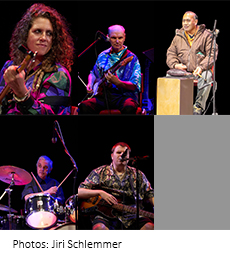
The Rocking Rainbows is a music band that began in 2019, blending therapeutic musicmaking with a spirit of collaboration and self-expression. What started as a simple idea between Reg (band member) and Sophie (music therapist), soon grew into a band with three other members: Michael, Matthew and Ina, the latest joining in 2024 and bringing a new musical energy with his Pacific Island drum (pātē). The story of the band is shaped by the voices of disabled musicians who have used music as a tool to build confidence, express emotions, and navigate challenges. Through collaborative songwriting, the band created songs inspired by personal experiences, relationships, struggles, and joy. Their performances at events like the New Zealand Fringe Festival and Newtown Festival in Wellington, New Zealand allowed them to share their music with wider audiences, building self-esteem and fostering a sense of community. The band’s journey highlights the power of music to connect, grow, and inspire, turning obstacles into opportunities for growth. The Rocking Rainbows’ evolution is a testament to the transformative nature of music and its potential to empower disabled individuals, to promote their creativity and share it with the world.
Notes
All the people involved in this paper have chosen to keep their real names and to share the fruit of their work in music therapy as well as in public performances. Before publishing this article, we discussed in clear terms that photos, videos, and text presented here would be publicly accessible. All participants gave informed consent to be publicly identified, a decision that reflects their sense of ownership, pride, and agency over the music they create. As Krüger and Murphy (2023) emphasise, acknowledging clients’ rights to their creative work is not only an ethical requirement but also an opportunity to strengthen their sense of identity and authorship.
The Rocking Rainbows take great pride in sharing their musical journey. They are proud of the work they do, the music they compose, record, and perform and they value opportunities to share their talent with the wider world. As Krüger (2018) notes, the act of public performance can be deeply validating, allowing creators to “stand out as someone worth listening to, with a voice and a story to tell” (p. 473). The purpose of this article is to serve as a platform for the band members’ voices and perspectives, giving them rightful authorship, visibility, and agency over their own narrative. Their decision to appear publicly and to be credited for their creative work
reflects a core value in community music therapy: that disabled individuals have the right to be heard, recognised, and celebrated as artists.
Riferimenti bibliografici
Aigen, K. S. (2004). Conversations on creating community: Performance as music therapy in New York City. In M. Pavlicevic & G. Ansdell (Eds.), Community music therapy (pp. 186–213). Jessica Kingsley.
Ansdell, G. (2005). Being who you aren’t; doing what you can’t: Community Music Therapy & the paradoxes of performance. Voices: A World Forum for Music Therapy, 5(3). https://doi.org/10.15845/voices.v5i3.229
Ansdell, G., & Stige, B. (2018). Community music therapy. In J. Edwards (Ed.), The Oxford handbook of music therapy (pp. 595–621). Oxford University Press. https://doi.org/10.1093/oxfordhb/9780199639755.001.0001
Bishop, R., & Berryman, M. (2006). Culture speaks: Cultural relationships and classroom learning. Huia Publishers.
Jampel, P. F. (2011). Performance in music therapy: Experiences in five dimensions. Voices: A World Forum for Music Therapy, 11(1). https://doi.org/10.15845/voices.v11i1.275
Krüger, V. (2018). Community music therapy as participatory practice in a child welfare setting – A Norwegian case study. Community Development Journal, Scandinavian special issue, 53(2), 465–481. https://doi.org/10.1093/cdj/bsy021
Krüger, V., & Murphy, K. M. (2023). The question of copyright in music therapy practice and research with children: A short essay. Voices: A World Forum for Music Therapy, 23(1). https://doi.org/10.15845/voices.v23i1.3392
Mitchell, L., Stige, B., & Vaillancourt, G. (2022). Equity, diversity, inclusion, and belonging in Canadian music therapy. Voices: A World Forum for Music Therapy, 22(2). https://voices.no/index.php/voices/article/view/4386
Moorfield, J. C. (2011). Mana. In Te aka: Māori-English, English-Māori dictionary and index. Pearson.
Pickard, B. (2020). Construction of normalcy and diversity in music therapy theory and practice (Doctoral thesis, University of South Wales). Retrieved from https://pure.southwales.ac.uk/en/publications/construction-of-normalcy-and-diversity-in-music-therapy-theory-an
Stige, B., & Bunt, L. (2014). Music therapy: An art beyond words (2nd ed.). Routledge.
Viega, M. (2017). Creating, providing, and performing space. Voices: A World Forum for Music Therapy, 17(3). https://doi.org/10.15845/voices.v17i3.952
Downloads
Pubblicato
Come citare
Fascicolo
Sezione
Licenza
Copyright (c) 2026 Sophie Sabri, Reg, Ina, Michael, Matthew

TQuesto lavoro è fornito con la licenza Creative Commons Attribuzione 4.0 Internazionale.
Articles published prior to 2019 are subject to the following license, see: https://voices.no/index.php/voices/copyright