
Queering Queer Spaces: Journey of a Creative Arts Program for Trans, Non-Binary, and Gender Creative Youth
DOI:
https://doi.org/10.15845/voices.v19i3.2687Parole chiave:
creative arts, art therapy, music therapy, adolescents, youth, middle school, LGBTQ, transgender, nonbinary, gender creative, questioning, non-cisgender, queering, social justiceAbstract
Queering* spazi queer*: viaggio di un programma di arti creative per giovani creativi trans, gender e non binari
Mentre gli spazi della comunità per individui LGBTQ+ continuano a espandersi ed evolversi, una varietà di programmi musicali e artistici ha iniziato a svilupparsi. Il potenziale di coltivare ed espandere questi programmi per i terapisti che lavorano con le arti creative non lascia alcun dubbio. Questo articolo cerca di presentare uno di questi programmi rivolti a giovani transgender, non binari, creativi gender e interpellanti, di età compresa tra 10 e 14 anni, i quali cercano supporto nel navigare la loro identità di genere e le sfide di identificazione al di fuori della "norma" del cisgender. Trovandoci a un crocevia fra i tradizionali servizi clinici di salute mentale e gli approcci basati sulla comunità, discutiamo sull'intenzionalità alla base del queering" come sviluppo del nostro programma, nonché di una serie di sfide e opportunità affrontate nel condurre il programma. Suggeriamo che la terapia con arti creative in spazi queer debba essere condotta attraverso un approccio anti-oppressivo, cercando di minimizzare dinamiche di potere e aumentare la sicurezza. Dobbiamo anche creare spazi inclusivi che abbraccino l'intersezionalità, al fine di fornire programmi sicuri, accessibili e potenzianti per persone LGBTQ+.
* Relativi all’eccentricità sociale rispetto alle definizioni di normalità codificate dalla cultura dominante, anche in riferimento all’orientamento sessuale e all’identità di genere.
Traduzione di Claudio Cominardi
Riferimenti bibliografici
Allen, K. D., Hammack, P. L., & Himes, H. L. (2012). Analysis of GLBTQ Youth Community-based Programs in the United States. Journal of Homosexuality, 59(9), 1289-1306, https://doi.org/10.1080/00918369.2012.72052.
Allen, S. (2017). The Trans Murder that started a Movement. The Daily Beast, Retrieved from https://www.thedailybeast.com/the-trans-murder-that-started-a-movement.
Alvarez, L., & Pérez-Peña, R. (2016). The New York Times. .: . Retrieved from https://www.nytimes.com/2016/06/13/us/orlando-nightclub-shooting.html.
Anzaldúa, G. E. (1987). Borderlands / La frontera: The New Mestiza. San Francisco, CA: Aunt Lute Books.
Bain, C. L., Grzanka, P. R., & Crowe, B. J. (2016). Toward a Queer Music Therapy: The Implications of Queer Theory for Radically Inclusive Music Therapy. The Arts in Psychotherapy, 50, 22-33, https://doi.org/10.1016/j.aip.2016.03.004.
Baines, S. (2013). Music Therapy as an Anti-Oppressive Practice. The Arts in Psychotherapy, 40, 1-5, https://doi.org/10.1016/j.aip.2012.09.003.
Barker, M. J., & Scheele, J. (2016). Queer: A Graphic History. London, UK: Icon Books.
Boggan, C. E., Grzanka, P. R., & Bain, C. L. (2017). Perspectives on Queer Music Therapy: A Qualitative Analysis of Music Therapists’ Reactions to Radically Inclusive Practice. Journal of Music Therapy, 54, 375-404, https://doi.org/10.1093/jmt/thx016.
CNN. (1998). Murder Charges Planned in Beating Death of Gay Student. Retrieved from https://web.archive.org/web/20060822005855/http://www.cnn.com/US/9810/12/wyoming.attack.03/index.html.
Choi, S. K., & Meyer, I. H. (2016). LGBT Aging: a Review of Research Findings, Needs, and Policy Implications. The Williams Institute. Retrieved from https://williamsinstitute.law.ucla.edu/wp-content/uploads/LGBT-Aging-A-Review.pdf.
Curran, J. W., & Jaffe, H. W. (2011). AIDS: The Early Years and CDC’s Response. Center for Disease Control and Prevention Morbidity and Mortality Weekly Report, 60(Suppl 4), 64-69, Retrieved from https://www.cdc.gov/mmwr/preview/mmwrhtml/su6004a11.htm.
Curtis, S. L. (2012). Music therapy and social justice: A personal journey. The Arts in Psychotherapy, 39, 209-213, https://doi.org/10.1016/j.aip.2011.12.004.
Drescher, J. (2015). Out of DSM: Depathologizing Homosexuality. Behavioral Sciences, 5(4), 565-575, https://doi.org/10.3390/bs5040565.
Fitzsimons, T. (2018). LGBTQ History Month: The Early Days of America's AIDS Crisis. NBC News, Retrieved from https://www.nbcnews.com/feature/nbc-out/lgbtq-history-month-early-days-america-s-aids-crisis-n919701.
Golub, D. (2005). Social Action Art Therapy. Art Therapy, 22(1), 17-23, https://doi.org/10.1080/07421656.2005.10129467.
Grotevant, H. D., & Cooper, C. R. (1986). Individuation in Family Relationships. Human development, 29, 82-100, https://doi.org/10.1159/000273025.
Hadley, S. (2006). Developing a Feminist Pedagogical Approach in Music Therapy. In S. Hadley (Ed.), Feminist Perspectives in Music Therapy (pp. 393-413). Gilsum, NH: Barcelona Publishers.
Hadley, S. (2013). Dominant Narratives: Complicity and the Need for Vigilance in the Creative Arts Therapies. The Arts in Psychotherapy, 40, 373-381, https://doi.org/10.1016/j.aip.2013.05.007.
Hardy, S. (2018). Music Therapy and Transgender Adolescents: A Community-Based Workshop to Promote Resilience (Master's thesis). Boston, MA: Berklee College of Music.
Hogan, S. (1997). Feminist Approaches to Art Therapy. London, UK: Routledge.
Human Rights Campaign. (2019). Violence Against the Transgender Community in 2019. Retrieved from https://www.hrc.org/resources/violence-against-the-transgender-community-in-2019.
Johns, M. M., Lowry, R., Andrzejewski, J., Barrios, L. C., Demissie, Z., McManus, T., & Underwood, J. M. (2019). Transgender Identity and Experiences of Violence Victimization, Substance Use, Suicide Risk, and Sexual Risk Behaviors Among High School Students – 19 States and Large Urban School Districts, 2017. Morbidity and Mortality Weekly Report, 68(3), 67-71, https://doi.org/10.15585/mmwr.mm6803a3.
Kosciw, J. G., Greytak, E. A., Zongrone, A. D., Clark, C. M., & Truong, N. L. (2018). The 2017 National School Climate Survey: The Experiences of Lesbian, Gay, Bisexual, Transgender, and Queer Youth in Our Nation's Schools. Retrieved from https://www.glsen.org/article/2017-national-school-climate-survey.
Kruse, J., & Walper, S. (2008). Types of Individuation in Relation to Parents: Predictors and outcomes. International Journal of Behavioral Development, 32(5), 390-400, https://doi.org/10.1177/0165025408093657.
Kunzel, R. (2017). Queer History, Mad History, and the Politics of Health. American Quarterly, 69(2), 315-319, https://doi.org/10.1353/aq.2017.0026.
LeFrançois, B. A. (2013). Queering Child and Adolescent Mental Health Services: The Subversion of Heteronormativity in Practice. Children & Society, 27(1), 1-12, https://doi.org/10.1111/j.1099-0860.2011.00371.x.
Mallory, C., Brown, T., & Conron, K. (2019). Conversion Therapy and LGBTQ Youth Update. The Williams Institute. Retrieved from https://williamsinstitute.law.ucla.edu/wp-content/uploads/Conversion-Therapy-LGBT-Youth-Update-June-2019.pdf.
Michaels, C. (2010). Historical Trauma and Microaggressions: A Framework for Culturally-Based Practice. Center for Excellence in Children’s Mental Health eReview. Retrieved fromhttp://www.ncdsv.org/images/CMHRerReview_TraumaAndChildWelfare-Part2_Oct2010.pdf.
Molloy, P. (2014). Twenty Years after Brandon Teena’s Death, Trans Rights Still have a Long Way to Go. The Advocate, Retrieved from https://www.advocate.com/politics/transgender/2014/01/02/20-years-after-brandon-teenas-death-trans-rights-still-have-long-way.
Nadal, K. L. (2018). Microaggressions and Traumatic Stress: Theory, Research, and Clinical Treatment. Washington DC, US: American Psychological Association. https://doi.org/10.1037/0000073-000.
Nylund, D., & Temple, A. (2017). Queer Informed Narrative Therapy: Radical Approaches to Counselling with Transgender Persons. In Social Justice and Counseling (pp. 159-170). New York, NY: Routledge. https://doi.org/10.4324/9781315753751-16.
Ogles, J. (2017). Thirty Infamous Police Raids of Gay Bars and Bathhouses. The Advocate, Retrieved from https://www.advocate.com/politics/2017/3/01/30-infamous-police-raids-gay-bars-and-bathhouses#slide-9.
Reisner, S. L., Vetters, R., Leclerc, M., Zaslow, S., Wolfrum, S., Shumer, D., & Mimiaga, M. J. (2015). Mental Health of Transgender Youth in Care at an Adolescent Urban Community Health Center: A Matched Retrospective Cohort Study. Journal of Adolescent Health, 56(3), 274-279, https://doi.org/10.1016/j.jadohealth.2014.10.264.
Rolvsjord, R. (2006). Therapy as Empowerment: Clinical and Political Implications of Empowerment Philosophy in Mental Health Practices of Music Therapy. Voices: A World Forum for Music Therapy, 6(3), https://doi.org/10.15845/voices.v6i3.283.
Richmond, K. A., Burnes, T., & Carroll, K. (2012). Lost in Trans-lation: Interpreting Systems of Trauma for Transgender Clients. Traumatology, 18(1), 45-57, https://doi.org/10.1177/1534765610396726.
Shelton, K., & Delgado-Romero, E. A. (2011). Sexual Orientation Microaggressions: The Experience of Lesbian, Gay, Bisexual, and Queer Clients in Psychotherapy. Journal of Counseling Psychology, 58(2), https://doi.org/10.1037/a0022251.
Sotero, M. (2006). A Conceptual Model of Historical Trauma: Implications for Public Health Practice and Research. Journal of Health Disparities Research and Practice, 1(1), 93-108.
Stults, C. B., Kupprat, S. A., Krause, K. D., Kapadia, F., & Halkitis, P. N. (2017). Perceptions of Safety Among LGBTQ People Following the 2016 Pulse Nightclub Shooting. Psychology of sexual orientation and gender diversity, 4(3), https://doi.org/10.1037/sgd0000240.
Sullivan, N. (2003). A Critical Introduction to Queer Theory. New York, NY: NYU Press.
Talwar, S. (2010). An Intersectional Framework for Race, Class, Gender, and Sexuality in Art Therapy. Art Therapy, 27(1), 11-17, https://doi.org/10.1080/07421656.2010.10129567.
Toomey, R. B., Syvertsen, A. K., & Shramko, M. (2018). Transgender Adolescent Suicide Behavior. Pediatrics, 142(4), e20174218, https://doi.org/10.1542/peds.2017-4218.
Vaillancourt, G. (2012). Music Therapy: A Community Approach to Social Justice. The Arts in Psychotherapy, 39(1), 173-178, https://doi.org/10.1016/j.aip.2011.12.011.
Wells, E. A., Asakura, K., Hoppe, M. J., Balsam, K. F., Morrison, D. M., & Beadnell, B. (2012). Social Services for Sexual Minority Youth: Preferences for What, Where, and How Services are Delivered. Children and youth services review, 36(2), 312-320, https://doi.org/10.1016/j.childyouth.2012.11.011.
White, M., & Epston, D. (1990). Narrative Means to Therapeutic Ends. New York, NY: W.W. Norton.
Zappa, A. (2017). Beyond erasure: The Ethics of Art Therapy Research with Trans and Gender-Independent People. Art Therapy, 34(3), 129-134, https://doi.org/10.1080/07421656.2017.1343074.
Downloads
Pubblicato
Come citare
Fascicolo
Sezione
Licenza
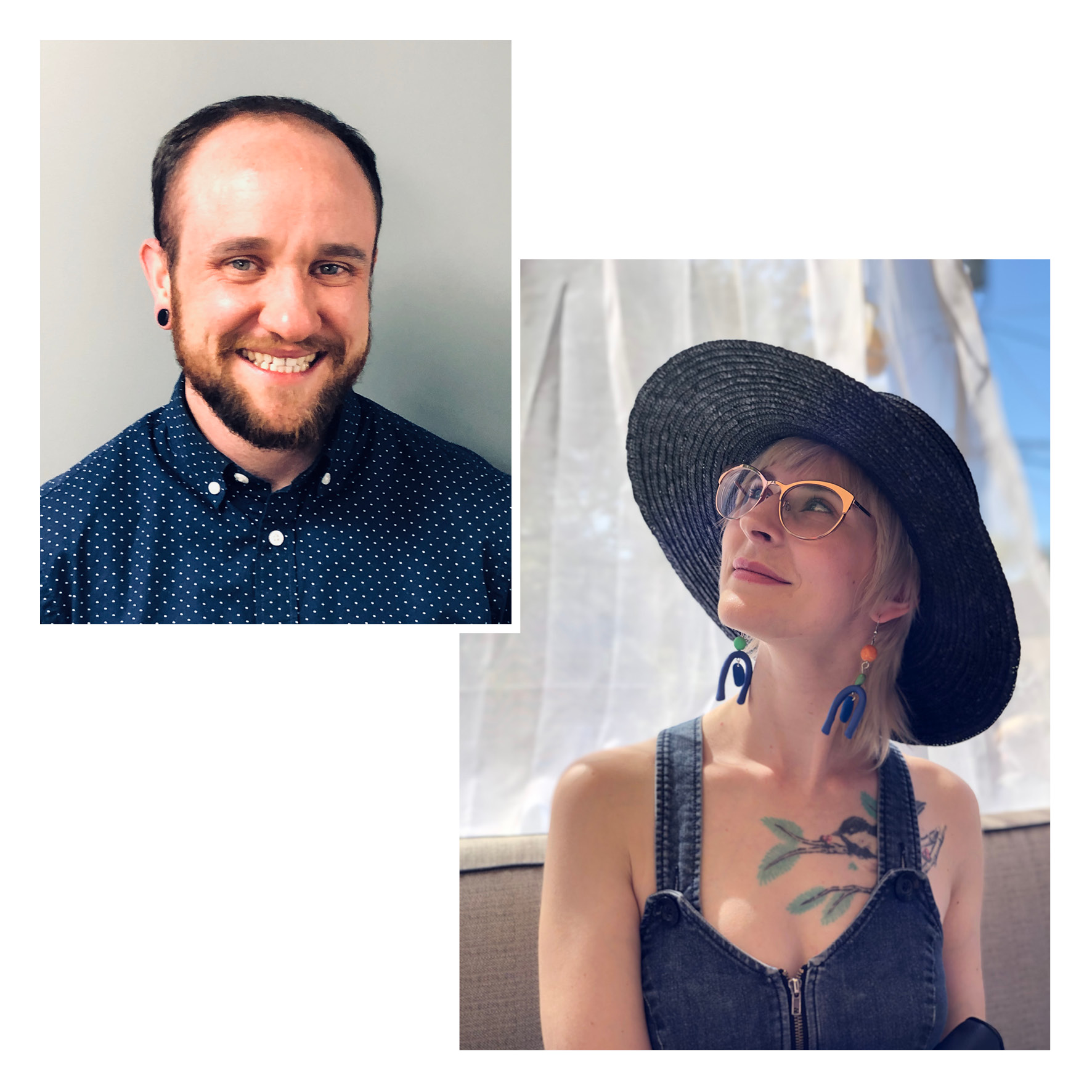
Copyright (c) 2019 Spencer Hardy, Juniper Monypenny

TQuesto lavoro è fornito con la licenza Creative Commons Attribuzione 4.0 Internazionale.
Articles published prior to 2019 are subject to the following license, see: https://voices.no/index.php/voices/copyright