
“But Does it Go Far Enough?”
Engaging with the Revised UK Health and Care Professions Council Standards of Proficiency as an Opportunity for Growth in Our Understanding of Emerging Critical Discourse on Disability and Music Therapy
DOI:
https://doi.org/10.15845/voices.v26i1.4560Keywords:
Music therapy, critical disability discourse, Health and Care Professions Council, professional regulation, disability, professional standardsAbstract
Arts therapists practising in the UK must be registered to the statutory regulator, the Health and Care Professions Council (HCPC), and adhere to their various standards, including the Standards of Proficiency (HCPC, 2023a). In 2023, these standards were significantly revised. This paper shares perspectives on how these revisions relate to emerging critical discourse on disability and music therapy. In relation to the construct of disability, music therapy has historically aligned itself, knowingly or unknowingly, with medically-informed paradigms. However, in recent years this has been questioned through engagement with other perspectives on disability (Cameron, 2014; Davies, 2022; Leza, 2020). Any revisions to the Standards of Proficiency have the potential to reflect these perspectives, impact practices which engage disabled people, and affect ongoing growth within the profession. In this spirit, each author has chosen aspects of these revised standards as starting points for reflecting on the following topics within music therapy: shifting paradigms around disability; disability and pedagogy; collaborative practice and research with disabled people; and the role of anti-oppressive language. We acknowledge the complexity of these issues and aim to raise questions rather than provide answers, inviting our audience to challenge and be challenged as they contribute to the profession.
Acknowledgements
We would like to acknowledge our colleague David Limmer, who was initially part of these discussions and was due to present alongside us. David planned to share his perspective as a disabled music therapist and present on the topics of accessibility and building collaborative approaches to music therapy with disabled people. Unfortunately, the late withdrawal of the option to attend the 2024 BAMT conference online that was initially promised meant that David was unable to attend, and he did not feel comfortable remotely participating in a roundtable about the issues faced by disabled people for a conference he and others were unable to be a part of.
References
Annesley, L. (Host). (2024, April). Jessica Leza (Episode 85) [Audio podcast episode]. In Music Therapy Conversations. British Association for Music Therapy. https://www.bamt.org/DB/podcasts-2/jessica-leza
Baggs, A. (2012). Untitled. In J. Bascom (Ed.), Loud hands: Autistic people, speaking (pp. 324–334). Autism Self-Advocacy Network.
Baines, S. (2013). Music therapy as an anti-oppressive practice. Arts in Psychotherapy, 40(1), 1–5. https://doi.org/10.1016/j.aip.2012.09.003 DOI: https://doi.org/10.1016/j.aip.2012.09.003
Baines, S. (2021). Anti-oppressive music therapy: Updates and future considerations. Arts in Psychotherapy, 75. https://doi.org/10.1016/j.aip.2021.101828 DOI: https://doi.org/10.1016/j.aip.2021.101828
Bakan, M. B. (2014). The musicality of stimming: Promoting neurodiversity in the ethnomusicology of autism. MUSICultures, 41(2).
Beresford, P., & Boxall, K. (2012). Service users, social work education and knowledge for social work practice. Social Work Education, 31(2), 155–167. https://doi.org/10.1080/02615479.2012.644944 DOI: https://doi.org/10.1080/02615479.2012.644944
Bolt, D. (2019). Cultural disability studies in education: Interdisciplinary navigations of the normative divide. Routledge. DOI: https://doi.org/10.4324/9781315102894
Bolt, D., & Penketh, C. (Eds.). (2016). Disability, avoidance and the academy: Challenging resistance. Routledge. DOI: https://doi.org/10.4324/9781315717807
Botha, M., & Frost, D. M. (2020). Extending the minority stress model to understand mental health problems experienced by the autistic population. Society and Mental Health, 10(1), 20–34. https://doi.org/10.1177/2156869318804297 DOI: https://doi.org/10.1177/2156869318804297
Bottema-Beutel, K., Kapp, S. K., Lester, J. N., Sasson, N. J., & Hand, B. N. (2021). Avoiding ableist language: Suggestions for autism researchers. Autism Adulthood, 3(1), 18–29. https://doi.org/10.1089/aut.2020.0014 DOI: https://doi.org/10.1089/aut.2020.0014
Bricher, G. (2010). Disabled people, health professionals and the social model of disability: Can there be a research relationship? Disability & Society, 15(5), 781–793. https://doi.org/10.1080/713662004 DOI: https://doi.org/10.1080/713662004
Brinkman, A. H., Rea-Sandin, G., Lund, E. M., Fitzpatrick, O. M., Gusman, M. S., Boness, C. L., & Scholars for Elevating Equity and Diversity (SEED) (2023). Shifting the discourse on disability: Moving to an inclusive, intersectional focus. American Journal of Orthopsychiatry, 93(1), 50–62. https://doi.org/10.1037/ort0000653 DOI: https://doi.org/10.1037/ort0000653
British Association for Behavioural & Cognitive Psychotherapies. (2025, March). Minimum training standards. British Association for Behavioural & Cognitive Psychotherapies (BABCP), https://babcp.com/about/who-are-babcp/ourpolicies/minimum-training-standards
British Psychological Society. (2024, n.d.). Expert by experience. The British Psychological Society (BPS). https://www.bps.org.uk/member-networks/division-clinicalpsychology/expert-experience
Burke, P. (2018). Trans/forming pedagogical spaces: Race, belonging and recognition in higher education. In J. Arday & H. S. Mirza (Eds.), Dismantling race in higher education: Racism, whiteness and decolonising the academy (pp. 365–382). Springer. DOI: https://doi.org/10.1007/978-3-319-60261-5_21
Cadogan, H., Price, A., & Watson, T. (2023, September 12). Co-producing professional healthcare education; how do we all work together? [Conference presentation abstract]. University of Roehampton, London, UK.
Cameron, C. A. (2014). Does disability studies have anything to say to music therapy? And would music therapy listen if it did? Voices: A World Forum for Music Therapy, 14(3). https://doi.org/10.15845/voices.v14i3.794 DOI: https://doi.org/10.15845/voices.v14i3.794
Care Council for Wales. (2017, January). Planning, commissioning and co-production. Social services and well-being (Wales) Act 2014. https://socialcare.wales/cmsassets/documents/hub-downloads/Planning_and_Commissioning_Resource_Guide_-_January_17.pdf
Cluley, V. (2016). Using photovoice to include people with profound and multiple learning disabilities in inclusive research. British Journal of Learning Disabilities, 45(1), 39–46. https://doi.org/10.1111/bld.12174 DOI: https://doi.org/10.1111/bld.12174
Coombes, E. (2024). The 17th World Congress of Music Therapy ‘Music therapists: Reflecting, connecting and innovating in the global community’ (Conference Report), Approaches: An Interdisciplinary Journal of Music Therapy, 16(2). htps://doi.org/10.56883/aijmt.2024.36 DOI: https://doi.org/10.56883/aijmt.2024.36
Cook, T., Brandon, T., Zonouzi, M., & Thomson, L. (2019). Destabilising equilibriums: Harnessing the power of disruption in participatory action research. Educational Action Research: Knowledge Democracy, 27(3), 379–395. https://doi.org/10.1080/09650792.2019.1618721 DOI: https://doi.org/10.1080/09650792.2019.1618721
Crenshaw, K. (1989). Demarginalizing the intersection of race and sex: A Black feminist critique of antidiscrimination doctrine, feminist theory and antiracist politics. University of Chicago Legal Forum, 140, 139–167.
Crompton, C. J., Ropar, D., Evans-Williams, C. V. M., Flynn, E. G., & Fletcher-Watson, S. (2020). Autistic peer-to-peer information transfer is highly effective. Autism 24(7), 1704–1712. DOI: https://doi.org/10.1177/1362361320919286
Davies, H. (2019). An ethnographic study of music-based disability arts with adults with Profound and Multiple Learning Disabilities (PMLD), with reference to the cultural model of disability and music therapy. [Unpublished Master’s thesis]. Guildhall School of Music and Drama.
Davies, H. (2022). “Autism is a way of being”: An insider perspective on neurodiversity, music therapy and social justice. British Journal of Music Therapy, 36(1). https://doi.org/10.1177/13594575221090182 DOI: https://doi.org/10.1177/13594575221090182
Davies, H., & Bakan, M. (2024). Music therapy and music-based approaches with autistic people: A neurodiversity-centred perspective. In K. Devlin, K. Kang & A. Pantelyat (Eds.), Music therapy & music-based interventions in neurology: Perspectives on research and practice (pp. 187–198). Springer Publishing. DOI: https://doi.org/10.1007/978-3-031-47092-9_15
Davies, H., Pickard, B., Roman, T., & Hadjineophytou, S. (2024, May 17–19). Engaging with the revised HCPC standards of proficiency as an opportunity for growth in our understanding of disability in the music therapy profession. British Association for Music Therapy Conference: About all of us, By all of us, For all of us, Leicester, UK.
De Haas, C., Grace, J., Hope, J., & Nind, M. (2022). Doing research inclusively: Understanding what it means to do research with and alongside people with profound intellectual disabilities. Social Sciences, 11(4), 1–13. https://doi.org/10.3390/socsci11040159 DOI: https://doi.org/10.3390/socsci11040159
Devlin, K. (2018). How do I see you, and what does that mean for us? An autoethnographic study. Music Therapy Perspectives, 36(2), 234–242. https://doi.org/10.1093/mtp/miy005 DOI: https://doi.org/10.1093/mtp/miy005
Devlin, K. (2024). Perspectives on perspective: Exploring the impact of therapist perspective on client experience in music therapy. [Unpublished doctoral dissertation]. Aalborg University, Denmark.
Devlin, K., Johnston, M., & Johnston, C. (2024). Making mistakes together: Therapy participant, parent and therapist perspectives on music therapy in different settings. Music Therapy Perspectives, 42(4), 129–138. https://doi.org/10.1093.mtp/miae007 DOI: https://doi.org/10.1093/mtp/miae007
Devlin, K., Meadows, A., Johnston, M., & Johnston, C. (2024). Ethical considerations in co-authoring research with music therapy stakeholders. Music Therapy Perspectives, 42(2), 139. https://doi.org/10.1093/mtp/miae009 DOI: https://doi.org/10.1093/mtp/miae009
Disability Rights UK. (2025). Social model of disability: Language. https://www.disabilityrightsuk.org/social-model-disabilitylanguage#:~:text=The%20Social%20Model%20of%20Disability%20states%20that%20people%20have%20impairments,the%20individual%2C%20rather%20than%20society.
Disability Wales. (2025). Social model. https://www.disabilitywales.org/social-model/
Dolmage, J. T. (2017). Academic ableism: Disability and higher education. University of Michigan Press. DOI: https://doi.org/10.3998/mpub.9708722
Enoka, K. (2022). An early career music therapist’s reflection on the neurodiversity paradigm and implications for advocating for neurodivergent participants through reporting for NDIS: Small steps in an agonistic journey. Australian Journal of Music Therapy, 33(2), 37–46.
Fricker, M. (2007). Epistemic injustice: Power and the ethics of knowing. Oxford University Press. DOI: https://doi.org/10.1093/acprof:oso/9780198237907.001.0001
Gabriel, D. (2019). Enhancing higher education practice through the 3D pedagogy framework to decolonize, democratize and diversify the curriculum. International Journal of Technology and Inclusive Education, 8(2), 1459–66. https://doi.org/10.20533/ijtie.2047.0533.2019.0178 DOI: https://doi.org/10.20533/ijtie.2047.0533.2019.0178
Goodley, D. (2017). Disability studies: An interdisciplinary introduction (2nd ed). Sage.
Grace, J., Nind, M., De Haas, C., & Hope, J. (2024). Expanding possibilities for inclusive research: Learning from people with profound intellectual and multiple disabilities and decolonising research. Social Sciences, 13(1), 1–11. https://doi.org/10.3390/socsci13010037 DOI: https://doi.org/10.3390/socsci13010037
Greenstein, A., Blyth, C., Blunt, C., Eardley, C., Frost, L., Hughes, R., Perry, B., & Townson, L. (2015). Exploring partnership work as a form of transformative education: You do your yapping and I just add in my stuff. Disability Studies Quarterly, 35(2). https://doi.org/10.18061/dsq.v35i2.4653 DOI: https://doi.org/10.18061/dsq.v35i2.4653
Grundy, I. (2024). Notes on notes: A critical reflection on clinical writing in music therapy practice. British Journal of Music Therapy, 38(1), 66–75. https://doi.org/10.1177/13594575241240133 DOI: https://doi.org/10.1177/13594575241240133
Hadjineophytou, S. (2022). Becoming “unknowing” and “inexpert”: Exploring the impact of language on perception and power in music therapy with Kirsty. Voices: A World Forum for Music Therapy, 22(3). https://doi.org/10.15845/voices.v22i3.3405 DOI: https://doi.org/10.15845/voices.v22i3.3405
Hadjineophytou, S. (2024). The 12th European Music Therapy Conference: ‘Music therapy in progress: Please disturb’ [Conference report] Approaches: An Interdisciplinary Journal of Music Therapy, 16(1). https://doi.org/10.56883/aijmt.2024.51 DOI: https://doi.org/10.56883/aijmt.2024.51
Hadjineophytou, S., & Apley, K. (2024, May 17-19). Music therapy is a radical force for social justice in institutions: Two complementary research projects. British Association for Music Therapy Conference: About all of us, By all of us, For all of us, Leicester, UK.
Hamilton, J., Ingham, B., McKinnon, I., Parr, J. R., Tam, L. Y., & Le Couteur, A. (2017). Mental capacity to consent to research? Experiences of consenting adults with intellectual disabilities and/or autism to research. British Journal of Learning Disabilities, 45(4), 230–237. https://doi.org/10.1111/bld.12198 DOI: https://doi.org/10.1111/bld.12198
Hardy, S. E., Malby, R., Hallett, N., Farooq, A., Chamley, C., Young, G., White, X. H., & Turner, W. (2018). Introducing a people’s academy into higher education. Higher Education, Skills and Work-Based Learning, 8(1), 70–79. https://doi.org/10.1108/HESWBL-10-2017-0075 DOI: https://doi.org/10.1108/HESWBL-10-2017-0075
Health and Care Professions Council (HCPC). (2012, April). Service user involvement in the design and delivery of education and training programmes learning to registration with the Health Professions Council. Kingston University, London. https://www.hcpc-uk.org/resources/reports/2012/service-user-involvement-in-the-design-and-delivery-of-education-and-training-programmes-leading-to-registration-with-the-healthprofessions-council/
Health and Care Professions Council (HCPC). (2017). Standards of education and training. Health and Care Professions Council. https://www.hcpc-uk.org/globalassets/resources/standards/standards-of-education-andtraining.pdf?v=638719218250000000
Health and Care Professions Council (HCPC). (2018, October). Who we are and what we do. Health and Care Professions Council. https://www.hcpc-uk.org/aboutus/corporate-governance/freedom-of-information/who-we-are-and-what-we-do/
Health and Care Professions Council (HCPC). (2023a, September). Standards of proficiency. Health and Care Professions Council. https://www.hcpc-uk.org/standards/standards-of-proficiency/
Health and Care Professions Council (HCPC). (2023b, January). Comparison tables. Health and Care Professions Council. https://www.hcpc-uk.org/standards/standardsof-proficiency/revisions-to-the-standards-of-proficiency/comparison-tables/
Health and Care Professions Council (HCPC). (2023c, January). Arts therapists. Health and Care Professions Council. https://www.hcpc-uk.org/standards/standards-ofproficiency/arts-therapists/
Health and Care Professions Council (HCPC). (2024, October). Meeting our standards. Health and Care Professions Council. https://www.hcpc-uk.org/standards/meetingour-standards/
Holmes, A. G. D. (2020). Researcher positionality—a consideration of its influence and place in qualitative research—A new researcher guide. International Journal of Education, 8(4), 1–10. https://doi.org/10.34293/education.v8i4.3232. DOI: https://doi.org/10.34293/education.v8i4.3232
Horgan, A., Manning, F., O’Donovan, M., Doody, R., Savage, E., Bradley, S. K., & Happell, B. (2020). Expert by experience involvement in mental health nursing education: The co-production of standards between experts by experience and academics in mental health nursing. Journal of Psychiatric and Mental Health Nursing, 27(5), 553–562. https://doi.org/10.1111/jpm.12605 DOI: https://doi.org/10.1111/jpm.12605
Ikuno, 生野 里花 R., Miyake, 三宅 博子 H., Zambonini, J. P., Eslava-Mejia, J., Moonga, N., Silveira, T. M., Low, M. Y., Ghetti, C., & Hadley, S. J. (2021). Whose voices? Whose knowledge? Voices: A World Forum for Music Therapy, 21(3). https://doi.org/10.15845/voices.v21i3.3470 DOI: https://doi.org/10.15845/voices.v21i3.3470
Johnson, K., & Walmsley, J. (2003). Inclusive research with people with Learning Disabilities: Past, present and futures. Jessica Kingsley Publishers.
Kumashiro, K. (2000). Toward a theory of anti-oppressive education. Review of Educational Research, 70(1), 25–53. https://doi.org/10.3102/00346543070001025 DOI: https://doi.org/10.3102/00346543070001025
Kuokkanen, R. (2008). What is hospitality in the academy? Epistemic ignorance and the (im)possible gift. Review of Education, Pedagogy and Cultural Studies, 30(1), 60–82. https://doi.org/10.1080/10714410701821297 DOI: https://doi.org/10.1080/10714410701821297
Laes, T., & Westerlund, H. (2018). Performing disability in music teacher education: Moving beyond inclusion through expanded professionalism. International Journal of Music Education, 36(1), 34–46. https://doi.org/10.1177/0255761417703782 DOI: https://doi.org/10.1177/0255761417703782
Langford, A., Rizkallah, M., & Maddocks, C. (2020). British Association of Music Therapy, Diversity report. British Association for Music Therapy.
Lehmann-Kuit, A., Short, A., & Catanzaro, M. (2023). It’s my way of releasing I guess: A longitudinal neurodiversity-affirming study sharing the perceptions and collaborative song creations of two autistic former music therapy participants. Australian Journal of Music Therapy, 34, 21–37.
Leza, J. (2020). Neuroqueering music therapy: Observations on the current state of neurodiversity in music therapy practice. In D. Milton (Ed.), The neurodiversity reader (pp. 210–225). Palgrave Macmillan.
Leza, J. (2023). An introduction to neurodiversity and Autistic culture for (music) therapists. La Migdalia Press.
Liasidou, A. (2014). Critical Disability Studies and socially just change in higher education. British Journal of Special Education, 41(2), 120–135. https://doi.org/10.1111/1467-8578.12063 DOI: https://doi.org/10.1111/1467-8578.12063
Liddiard, K., Runswick-Cole, K., Goodley, D., Whitney, S., Vogelmann, E., & Watts MBE, L. (2019). I was excited by the idea of a project that focuses on those unasked questions: Co-producing disability research with disabled young people. Children and Society, 33(2), 154–167. https://doi.org/10.1111/chso.12308 DOI: https://doi.org/10.1111/chso.12308
Lindo, D. (2023). Examining the accessibility of MA music therapy training in the United Kingdom for ethnic minority communities. British Journal of Music Therapy, 37(1), 5–16. https://doi.org/10.1177/13594575231154491 DOI: https://doi.org/10.1177/13594575231154491
Low, M. Y., McFerran, K. S., Viega, M., Carroll-Scott, A., McGhee Hasrick, E., & Bradt, J. (2022). Exploring the lived experiences of young autistic adults in Nordoff-Robbins music therapy: An interpretative phenomenological analysis. Nordic Journal of Music Therapy, 32(1), 1–24. https://doi.org/10.1080/08098131.2022.2151640 DOI: https://doi.org/10.1080/08098131.2022.2151640
Mains, T., Clarke, V., & Annesley, L. (2024). Music therapy is the very definition of white privilege”: Music therapists’ perspectives on race and class in UK music therapy. Approaches: An Interdisciplinary Journal of Music Therapy, First View. https://doi.org/10.56883/aijmt.2024.20 DOI: https://doi.org/10.56883/aijmt.2024.20
Marshall, Z., Nixon, S., Nepveux, D., Vo, T., Wilson, C., Flicker, S., McClelland, A., & Proudfoot, D. (2012). Navigating risks and professional roles: Research with lesbian, gay, bisexual, trans, and queer young people with intellectual disabilities. Journal of Empirical Research on Human Research Ethics, 7(4), 20–33. https://doi.org/10.1525/jer.2012.7.4.20 DOI: https://doi.org/10.1525/jer.2012.7.4.20
McFerran, K. (2016). Transparent publishing. Voices: A World Forum for Music Therapy, 16(3). https://doi.org/10.15845/voices.v16i3.896 DOI: https://doi.org/10.15845/voices.v16i3.896
McMahon, M., Doyle, C., Burke, E., Fleming, S., Clearly, M., Byrne, K., McGlinchey, E., Keenan, P., McCarron, M., Horan, P., & Sheerin, F. (2024). Addressing health inequality and inequity for people with intellectual disabilities: A collective responsibility for all nurses. Tizard Learning Disability Review, 29(¾), 174–183. http://doi.org/10.1108/TLDR-06-2024-0026 DOI: https://doi.org/10.1108/TLDR-06-2024-0026
Metell, M. (2019). How we talk when we talk about disabled children and their families: An invitation to queer the discourse. Voices: A World Forum for Music Therapy, 19(3). https://doi.org/10.15845/voices.v19i3.2680 DOI: https://doi.org/10.15845/voices.v19i3.2680
Milner, P., & Frawley, P. (2019). From ‘on’ to ‘with’ to ‘by’: People with a learning disability creating a space for the third wave of Inclusive Research. Qualitative Research, 19(4), 382–398. https://doi.org/10.1177/1468794118781385 DOI: https://doi.org/10.1177/1468794118781385
Milton, D. (2012). On the ontological status of autism: The ‘double empathy problem’. Disability & Society 27(6). https://doi.org/10.1080/09687599.2012.710008 DOI: https://doi.org/10.1080/09687599.2012.710008
Mires-Richards, E., Field, S., & Sanderson, J. (2020). See yourself on the shelf: A collaborative approach for diversifying library collections. ALISS Quarterly, 15(2), 6–9.
Mitchell, D. (2016). Disability, diversity and diversion: Normalization and avoidance in higher education. In D. Bolt & C. Penketh (Eds.), Disability, avoidance and the academy: Challenging resistance (pp. 9–20). Routledge. https://doi.org/10.4324/9781315717807- DOI: https://doi.org/10.4324/9781315717807-2
Mössler, K., Halstead, J., Metell, M., Gottschewski, K,. & Schmid, W., (2023). “The room is a mess”: Exploring the co-creation of space for attunement dynamics between an autistic child and a non-autistic music therapist. Nordic Journal of Music Therapy, 32(4), 321–340. https://doi.org/10.1080/08098131.2022.2145346 DOI: https://doi.org/10.1080/08098131.2022.2145346
Museus, S.D. (2014). The Culturally Engaging Campus Environments (CECE) model: A new theory of success among racially diverse college student populations. In M. Paulsen (Ed.), Higher Education: Handbook of theory and research (pp. 189–227). Springer. DOI: https://doi.org/10.1007/978-94-017-8005-6_5
Noone, J. F. (2018). The applications of mainstream music technology to facilitate access to creative musical experiences for people with disabilities. [Doctoral dissertation]. University of Limerick. https://doi.org/10.13140/rg.2.2.18245.09449
Penketh, C. (2020). Towards a vital pedagogy: Learning from anti-ableist practice in art education. International Journal of Education Through Art, 16(1), 13–27. https://doi.org/10.1386/eta_00014_1 DOI: https://doi.org/10.1386/eta_00014_1
Pickard, B. (2019). Valuing neurodiversity: A humanistic, non-normative model of music therapy exploring Rogers’ person-centred approach with young adults with autism spectrum conditions. In H. Dunn, E. Coombes, E. Maclean, H. Mottram & J. Nugent (Eds.), Music therapy and autism across the lifespan: A spectrum of approaches (pp. 297–330). Jessica Kingsley Publishers.
Pickard, B. (2020). A critical reflection on the HCPC standards of proficiency for arts therapists: A critical Disability Studies perspective. British Journal of Music Therapy, 34(2), 82–94. https://doi.org/10.1177/1359457520971812 DOI: https://doi.org/10.1177/1359457520971812
Pickard, B. (2021). Challenging deficit-based discourse in higher education through a social connection model of responsibility: A critical disability studies perspective. [Doctoral dissertation]. University of South Wales. https://pure.southwales.ac.uk/en/studentTheses/challenging-deficit-based-discoursein-higher-education-through-a
Pickard, B. (2022a). Anti-oppressive pedagogy as an opportunity for consciousness raising in the music therapy profession: A critical disability studies perspective. British Journal of Music Therapy, Special Issue: Equality, Diversity, Inclusion and Belonging, 36(1), 5–15. https://doi.org/10.1177/13594575221078582 DOI: https://doi.org/10.1177/13594575221078582
Pickard, B. (2022b). The importance of collaboration: Valuing the expertise of disabled people through social confluence. In H. King (Ed.), Developing expertise for teaching in higher education: Practical ideas for professional learning and development SEDA (pp. 69–84). Routledge. DOI: https://doi.org/10.4324/9781003198772-7
Pickard, B., & Davies, H. (2024, May 17-19). An asset to the profession, not an inconvenience: The lived experiences of past and present disabled music therapists and disabled music therapy students in the UK. British Association for Music Therapy Conference: About all of us, By all of us, For all of us, Leicester, UK.
Pickard, B., & Davies, H. (in press). An asset to the profession, not an inconvenience: The lived experiences of past and present disabled music therapists and disabled music therapy students in the UK.
Pickard, B., Thompson, G., Metell, M., Roginsky, E., & Elefant, C. (2020). It’s not what’s done, but why it’s done”: Music therapists’ understanding of normalisation, maximisation and the neurodiversity movement. Voices: A World Forum for Music Therapy, 20(3). https://doi.org/10.15845/voices.v20i3.3110 DOI: https://doi.org/10.15845/voices.v20i3.3110
Price, D. (2022). Unmasking autism: The power of embracing our hidden neurodiversity. Monoray.
Price, M. (2024). Crip spacetime: Access, failure, and accountability in academic life. Duke University Press. DOI: https://doi.org/10.1353/book.124605
Procter, S. (2001). Empowering and enabling. Voices: A World Forum for Music Therapy, 1(2). https://doi.org/10.15845/voices.v1i2.58 DOI: https://doi.org/10.15845/voices.v1i2.58
Redman, S., Greenhalgh, T., Adedokun, L., Staniszewska, S., & Denegri, S. (2021). Coproduction of knowledge: The future. British Medical Journal, 372(434). https://doi.org/10.1136/bmj.n434 DOI: https://doi.org/10.1136/bmj.n434
Rizkallah, M. (2022). In defence of working with “patients” in music therapy. Approaches: An Interdisciplinary Journal of Music Therapy, 16(1). https://doi.org/10.56883/aijmt.2024.72 DOI: https://doi.org/10.56883/aijmt.2024.72
Rolvsjord, R. (2014). The competent client and the complexity of dis-ability. Voices: A World Forum for Music Therapy, 14(3). https://doi.org/10.15845/voices.v14i3.787 DOI: https://doi.org/10.15845/voices.v14i3.787
Roman, T. (2022). Developing a research approach to explore therapeutic relationships with children and young people with complex needs: A critical reflection. British Journal of Music Therapy, 36(1). https://doi.org/10.1177/13594575221090180 DOI: https://doi.org/10.1177/13594575221090180
Schucan Bird, K., & Pitman, L. (2020). How diverse is your reading list? Exploring issues of representation and decolonisation in the UK. Higher Education, 79, 903–920. https://doi.org/10.1007/s10734-019-00446-9 DOI: https://doi.org/10.1007/s10734-019-00446-9
Shaw, L. R., Chan, F., & McMahon, B. T. (2012). Intersectionality and disability harassment: The interactive effects of disability, race, age, and gender. Rehabilitation Counseling Bulletin, 55(2), 82–91. https://doi.org/10.1177/0034355211431167 DOI: https://doi.org/10.1177/0034355211431167
Shilldrick, M. (2020). Critical disability studies: rethinking the conventions for the age of postmodernity. In N. Watson & S. Vehmas (Eds.), Routledge handbook of disability studies (2nd ed., pp. 32–44). Routledge.
Snyder, S., & Mitchell, D. (2006). Cultural locations of disability. The University of Chicago Press. DOI: https://doi.org/10.7208/chicago/9780226767307.001.0001
Stone, E., & Priestley, M. (1996). Parasites, pawns and partners: Disability research and the role of non-disabled researchers. British Journal of Sociology, 47(4), 699–716. https://doi.org/10.2307/591081 DOI: https://doi.org/10.2307/591081
Swamy, S., & Webb, A. (2022). Voices of change: Learning from the lived experiences of minoritized music therapists. Music Therapy Perspectives, 40(2), 121–124. https://doi.org/10.1093/mtp/miac027 DOI: https://doi.org/10.1093/mtp/miac027
Tack, S. (2022). Teaching for liberation: The manifesto assignment as an example of bell hooks’ engaged pedagogy. Australian Feminist Studies, 37(113), 317–333. https://doi.org/10.1080/08164649.2023.2255931 DOI: https://doi.org/10.1080/08164649.2023.2255931
Thomas, D. S. P., & Jivraj, S. (Eds.). (2020). Towards decolonising the university: A kaleidoscope for empowered action. Counterpress.
UK Government. (2005). Mental Capacity Act 2005. https://www.legislation.gov.uk/ukpga/2005/9/contents
UK Government. (2014a). Care Act 2014. https://www.legislation.gov.uk/ukpga/2014/23/contents
UK Government. (2014b). Social Services and Well-being (Wales) Act 2014. https://www.legislation.gov.uk/anaw/2014/4/contents
United Nations. (2006). Convention on the Rights of Persons with Disabilities (CRPD).
United Nations, Department of Economic and Social Affairs. https://www.un.org/development/desa/disabilities/convention-on-the-rights-ofpersons-with-disabilities.html
University of South Wales. (2024). Diversity Curators. https://libguides.southwales.ac.uk/DiversityCurators
University of South Wales. (2025). Teaching and Research Advisory Committee (TRAC). https://udidd.research.southwales.ac.uk/teaching-research-advisory-committee-trac/
Wales PRIME Centre. (2016). Lay Involvement https://primecentrewales.yolasite.com/public-involvement---archive.php
Walker, N. (2012). Throw away the master’s tools: Liberating ourselves from the pathology paradigm. In J. Bascom (Ed.), Loud hands: Autistic people, speaking (pp. 225–237). Autistic Self-Advocacy Network.
Walker, N. (2021). Neuroqueer heresies: Notes on the neurodiversity paradigm, autistic empowerment, and postnormal possibilities. Autonomous Press.
Warner, C. (2005). Music therapy with adults with learning difficulties and ‘severe challenging behaviour’. [Doctoral dissertation]. University of the West of England, Bristol http://catalog.crl.edu/record=b2226472
Watson, T., & Warner, C. (2024). Contemporary issues in music therapy training: A resource for trainees, trainers and practitioners. Routledge. DOI: https://doi.org/10.4324/9781003517962
Winter, P. (2012). Loud hands and loud voices. In J. Bascom (Ed.), Loud hands: Autistic people, speaking (pp. 115–128). Autistic Self-Advocacy Network.
World Health Organization. (2022, December). Global report on health equity for persons with disabilities. World Health Organization. https://www.who.int/teams/noncommunicable-diseases/sensory-functions-disabilityand-rehabilitation/global-report-on-health-equity-for-persons-with-disabilities
Ziegler, M. E. (2020). Disabling language: Why legal terminology should comport with a social model of disability. Boston College Law School, 61(3), 1183–1221. https://lawdigitalcommons.bc.edu/bclr/vol61/iss3/8
Downloads
Published
How to Cite
Issue
Section
License
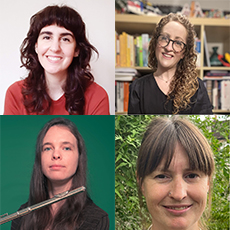
Copyright (c) 2026 Stella Hadjineophytou, Beth Pickard, Hilary Davies, Tara Roman

This work is licensed under a Creative Commons Attribution 4.0 International License.
Articles published prior to 2019 are subject to the following license, see: https://voices.no/index.php/voices/copyright