
Music Therapy to Meet the Needs of Forcibly Displaced Children
Teachers’, Music Therapy Students,and Administrators’ Experiences from the Initial Phases of a School Project for Ukrainian Children
DOI:
https://doi.org/10.15845/voices.v26i1.4379Keywords:
community music therapy, participation, efugee children, education, sociocultural learningAbstract
This paper investigates the role of music therapy in supporting refugee children and youth from Ukraine during their initial resettlement in Norwegian schools. With the ongoing war in Ukraine escalating since 2022, a significant number of refugees have sought safety in Norway, prompting the exploration of music therapy as a tool for their emotional and social adaptation. The study employs focus group interviews with school staff, utilizing thematic and narrative analysis to uncover key insights. The findings are categorized into two main themes: How Music Provided Support andChallenges in Implementing Music Therapy. The first theme highlights the positive impact of music therapy, including its ability to provide emotional support through calming activities, foster relationships among peers and between students and teachers, and promote a sense of fun and mastery. The second theme addresses the obstacles encountered during implementation, such as the initial lack of structure and continuity, limited understanding of music therapy’s role, and the need for stronger institutional support at higher levels within the school system. These findings underscore the value of music therapy in promoting resilience and social cohesion, while also emphasizing the importance of clear organizational frameworks and interdisciplinary collaboration for successful implementation. The paper concludes by proposing implications for practice.
Acknowledgements
The project received support from Polyfon knowledge cluster for music therapy, to create a qualitative study of the initial phase.
References
Baker, F., & Jones, C. (2006). The effect of music therapy services on classroom behaviours of newly arrived refugee students in Australia: A pilot study. Emotional and Behavioural Difficulties,11(4), 249–260. https://doi.org/10.1080/13632750601022170 DOI: https://doi.org/10.1080/13632750601022170
Bell, S. A. (2016). A music therapist’s self-reflection on her aboriginal heritage: A heuristic self-inquiry(Publication No. 981196)[Master’s thesis, Concordia University]. Spectrum Research Repository. https://spectrum.library.concordia.ca/id/eprint/981196/1/Bell_MA_S2016.pdf
Braun, V., & Clarke, V. (2006). Using thematic analysis in psychology. Qualitative Research in Psychology,3(2), 77–101. https://doi.org/10.1191/1478088706qp063oa DOI: https://doi.org/10.1191/1478088706qp063oa
Caritas Internationalis. (n.d.). Ukraine. Retrieved May 27, 2025, from https://www.caritas.org/where-caritas-work/europe/ukraine/
Crooke, A. H. D., & McFerran, K. (2014). Recommendations for the investigation and delivery of music programs aimed at achieving psychosocial wellbeing benefits in mainstream schools. Australian Journal of Music Education, 1, 15–37. https://files.eric.ed.gov/fulltext/EJ1061963.pdf
Donley, J. (2020). Multicultural experiential learning in music therapy supervision. Voices: A World Forum for Music Therapy, 20(1). https://doi.org/10.15845/voices.v20i1.2797 DOI: https://doi.org/10.15845/voices.v20i1.2797
Einarsen, O. K., Krüger, V., Engebretsen, I., & Stige, B. (2024). Towards a sustainable use of music –Social workers’ reflections on the use of music among unaccompanied refugee children in a child protection setting: A semi-structured focus group study. Voices: A World Forum for Music Therapy, 24(3). https://doi.org/10.15845/voices.v24i3.4071 DOI: https://doi.org/10.15845/voices.v24i3.4071
Enge, K. E. A., & Stige, B. (2022). Musical pathways to the peer community: A collective case study of refugee children’s use of music therapy. Nordic Journal of MusicTherapy, 31(1), 7–24. https://doi.org/10.1080/08098131.2021.1891130 DOI: https://doi.org/10.1080/08098131.2021.1891130
Fazel, M., & Betancourt, T. S. (2018). Preventive mental health interventions for refugee children and adolescents in high-income settings.The Lancet. Child & Adolescent Health,2(2), 121–132. https://doi.org/10.1016/S2352-4642(17)30147-5 DOI: https://doi.org/10.1016/S2352-4642(17)30147-5
Fazel, M. D., Reed, R. V., Panter-Brick, C., & Stein, A. P. (2012). Mental health of displaced and refugee children resettled in high-income countries: Risk and protective factors. Lancet, 379(9812), 266–282. https://doi.org/10.1016/S0140-6736(11)60051-2 DOI: https://doi.org/10.1016/S0140-6736(11)60051-2
Ghetti, C. M. (2016). Phenomenological research in music therapy. In J. Edwards (Ed.),The Oxford handbook of music therapy (pp. 767-800). Oxford University Press. https://doi.org/10.1093/oxfordhb/9780199639755.013.15 DOI: https://doi.org/10.1093/oxfordhb/9780199639755.013.15
Gonzalez, P. J. (2011). The impact of music therapists’ music cultures on the development of their professional frameworks. Qualitative Inquiries in Music Therapy, 6, 1–33. https://barcelonapublishers.com/resources/QIMTV6/GONZALEZ.pdf
Hense, C., & McFerran, K. S. (2017). Promoting young people’s musical identities to facilitate recovery from mental illness. Journal of Youth Studies, 20(8), 997–1012. https://doi.org/10.1080/13676261.2017.1287888 DOI: https://doi.org/10.1080/13676261.2017.1287888
Heynen, E., Bruls, V., van Goor, S., Pat-El, R., Schoot, T., & van Hooren, S. (2022). A music therapy intervention for refugee children and adolescents in schools: A process evaluation using a mixed method design.Children,9(10), 1434. https://doi.org/10.3390/children9101434 DOI: https://doi.org/10.3390/children9101434
Kim, J., Chesworth, B., Franchino-Olsen, H., & Macy, R. J. (2022). A scoping review of vicarious trauma interventions for service providers working with people who have experienced traumatic events.Trauma, Violence & Abuse,23(5), 1437–1460. https://doi.org/10.1177/1524838021991310 DOI: https://doi.org/10.1177/1524838021991310
Krüger, V., & Diaz, E. (2023). The potential to meet the needs of refugees and other migrants through music therapy.The Lancet Regional Health –Europe,29, 100637. https://doi.org/10.1016/j.lanepe.2023.100637 DOI: https://doi.org/10.1016/j.lanepe.2023.100637
Lau, W., Silove, D., Edwards, B., Forbes, D., Bryant, R., McFarlane, A., Hadzi-Pavlovic, D., Steel, Z., Nickerson, A., Van Hooff, M., Felmingham, K., Cowlishaw, S., Alkemade, N., Kartal, D., & O’Donnell, M. (2018). Adjustment of refugee children and adolescents in Australia: Outcomes from wave three of the Building a New Life in Australia study. BMC Medicine,16, 157. https://doi.org/10.1186/s12916-018-1124-5 DOI: https://doi.org/10.1186/s12916-018-1124-5
Mallon, T., & Hoog Antink, M. (2021).The sound of lost homes: Introducing the COVER Model –Theoretical framework and practical insight into music therapy with refugees and asylum seekers. Voices: A World Forum for Music Therapy,21(2).https://doi.org/10.15845/voices.v21i2.3124 DOI: https://doi.org/10.15845/voices.v21i2.3124
Office of the High Commissioner for Human Rights. (1989). United Nations convention on the rights of the child. Retrieved in October 2024. https://www.ohchr.org/en/instruments-mechanisms/instruments/convention-rights-child
Rickson, D., & McFerran, K. (2014). Creating music cultures in the schools: A perspectivefrom Community Music Therapy.Barcelona Publishers.
Roaldsnes, M. H. (2017). Musikk i helsefremmande arbeid med einslege mindreårige flyktningar. Ein kvalitativ studie av ei musikkgruppe for ungdom med bakgrunn som einslege flyktningbarn[Music in health-promoting work with unaccompanied minor refugees. A qualitative study of a music group for adolescents with a background as unaccompanied minor refugees] [Doctoral dissertation, Norwegian Academy of Music.] Norwegian Research Information Repository. https://nmh.no/forskning/publikasjoner/musikk-i-helsefremmande-arbeid-med-einslege-mindrearige-flyktningar
Schmid, W., & Rolvsjord, R. (2020). Becoming a reflexive practitioner: Exploring musictherapy students’ learning experiences with participatory role-play in a Norwegian context. Scandinavian Journal of Educational Research, 65(6), 785–802. https://doi.org/10.1080/00313831.2020.1755723 DOI: https://doi.org/10.1080/00313831.2020.1755723
Scrine, E. (2019). Reframing intervention and inclusion: The importance of exploring gender and sexuality in music therapy with all young people. In K. McFerran, P. Derrington & S. Saarikallio (Eds.), Handbook of music, adolescents, and wellbeing(pp. 151–161). Oxford University Press. https://doi.org/10.1093/oso/9780198808992.001.0001 DOI: https://doi.org/10.1093/oso/9780198808992.003.0014
Stige, B., Malterud, K., & Midtgarden, T. (2009). Toward an agenda for evaluation of qualitative research. Qualitative Health Research,19(10), 1504–1516. https://doi.org/10.1177/1049732309348501 DOI: https://doi.org/10.1177/1049732309348501
Storsve, V., Westbye, I. A., & Ruud, E. (2010). Hope and recognition: A music project among youth in a Palestinian refugee camp. Voices: A World Forum for Music Therapy, 10(1). https://doi.org/10.15845/voices.v10i1.158 DOI: https://doi.org/10.15845/voices.v10i1.158
Twyford, K. (2008). Integrated team working: Music therapy as part of transdisciplinary and collaborative approaches. Jessica Kingsley Publishers.
United Nations High Commissioner for Refugees. (2023). Global trends: Forced displacement in 2023. Retrieved from https://www.unhcr.org/globaltrends
United Nations High Commissioner for Refugees. (2025). Operational Guidance on the Protection of Refugees and Migrants in the Context of Resettlement. Retrieved from https://www.unhcr.org/resettlement-handbook/
University of Bergen. (n.d.).Rette. Retrieved October 17, 2024, from https://rette.app.uib.no/
Weiss, C., & Bensimon, M. (2019). Group music therapy with uprooted teenagers: The importance of structure. Nordic Journal of Music Therapy, 29(1), 20–35. https://doi.org/10.1080/08098131.2019.1695281 DOI: https://doi.org/10.1080/08098131.2019.1695281
World Health Organization. (2023). The health of refugees and migrants in the WHO European Region. https://www.who.int/europe/news-room/fact-sheets/item/the-health-of-refugees-and-migrants-in-the-who-european-region
Downloads
Published
How to Cite
Issue
Section
License
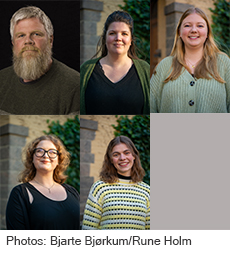
Copyright (c) 2026 Viggo Krüger, Julie Liisberg , Sanna Martine Sørum, Ylva Jonsson, Jenny Daling Korsøen

This work is licensed under a Creative Commons Attribution 4.0 International License.
Articles published prior to 2019 are subject to the following license, see: https://voices.no/index.php/voices/copyright